
| Poenari (também Poienari) Fatos rápidos sobre a Fortaleza | |
|---|---|
| Localização: | Região da Valáquia – sul da Romênia |
| Endereço: | comuna Arefu, DN 7C, (108 milhas a noroeste de Bucareste) |
| Cidade grande mais próxima: | Curtea de Arges (15 milhas ao sul) Târgoviște (86 milhas a sudeste) |
| Estação ferroviária mais próxima: | Curtea de Arges |
| Paragem de autocarro mais próxima: | Căpățânenii Ungureni |
| Horário: | 10h às 17h, diariamente |
| Admissão: | 30 lei (adultos) / 20 lei (estudantes e idosos) |
| Telefone: | (+4) 0248 212.561 |
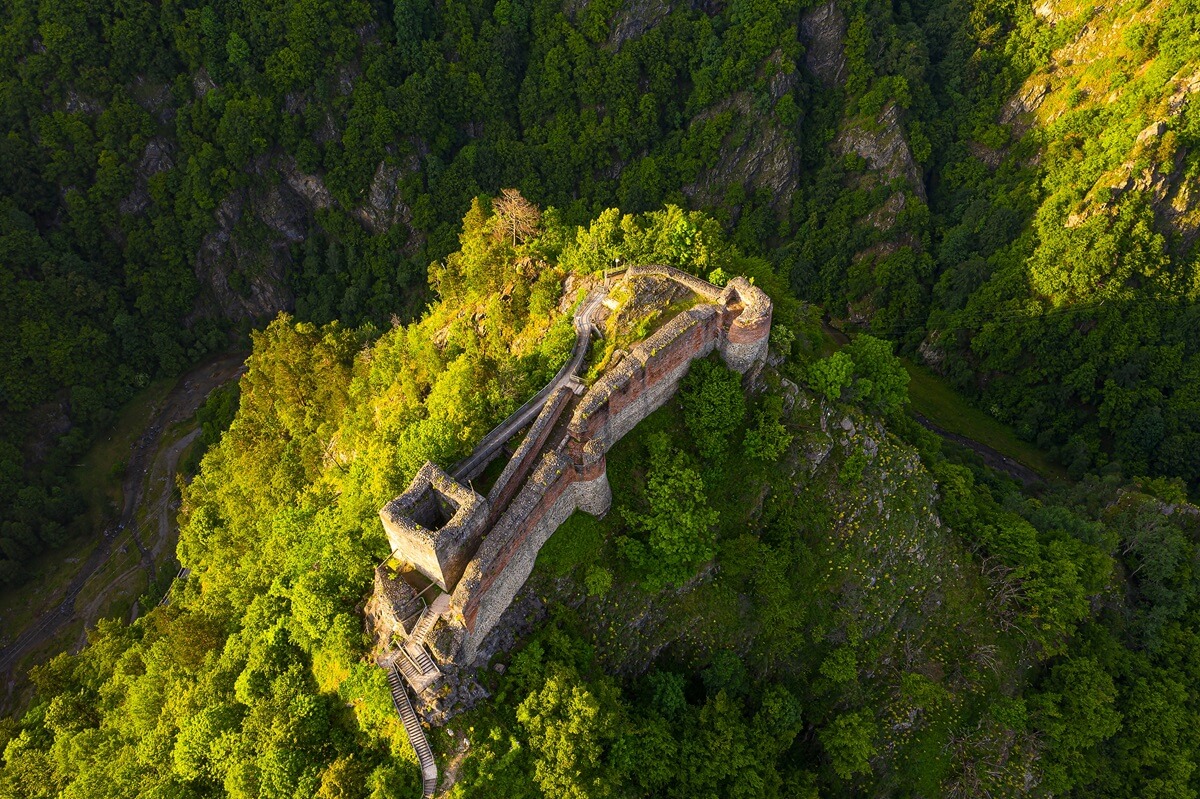
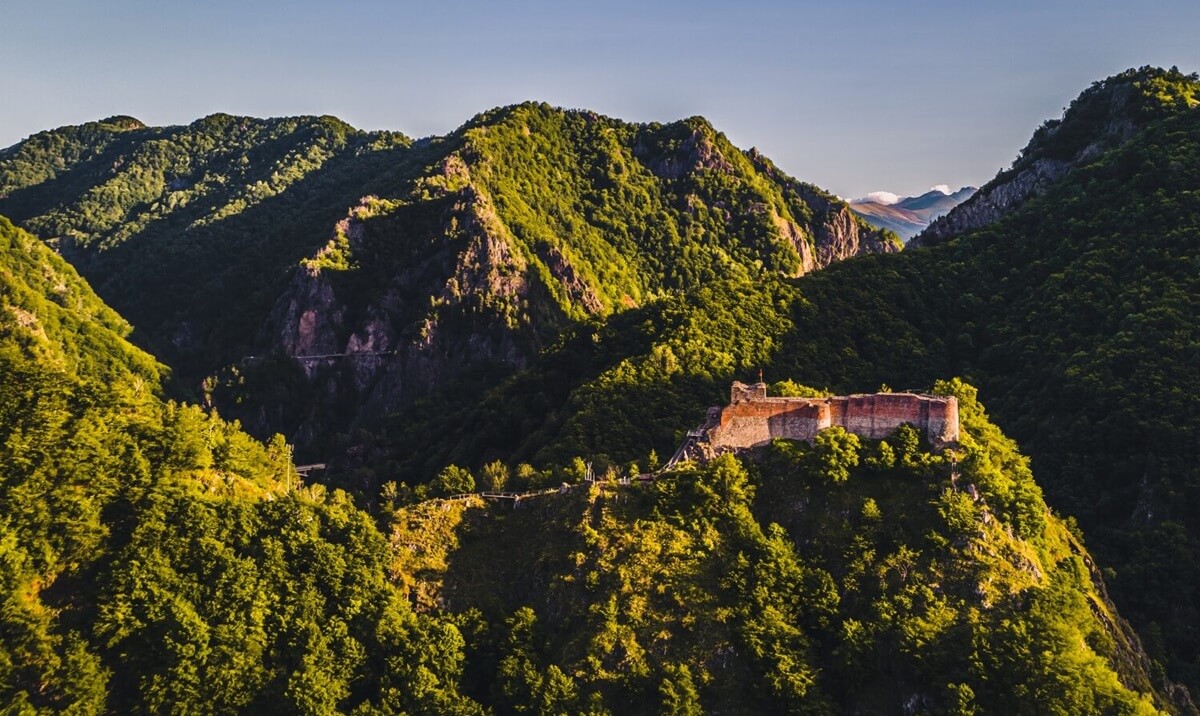
The remains of Poenari (also spelled Poienari) Fortress - Prince Vlad Tepes Draculea citadel ("Cetatea lui Țepeş Vodă") - ficar no alto de uma Montanhas dos Cárpatos cliff, overlooking Arges River. Commissioned at the beginning of the 13th century by prince Negru Vodă ruler of Wallachia (southern Romania), the castle changed names and residents a few times over the centuries. The fortress served as a shelter for voivodes, the country's treasury or as a place of imprisonment, for boyars guilty of "swindling".
Voivoda Vlad Țepeș - Draculea (Vlad, o Empalador) reconheceu o potencial da fortaleza e
ordenou que a estrutura fosse ampliada e consolidada, fazendo de Poenari uma de suas residências secundárias.
A investigação arqueológica revela uma série de aspectos relacionados com a história desta fortaleza:
O núcleo inicial da fortaleza era representado por uma torre retangular de quatro níveis (28 pés x 28 pés),
erguido no início de 1300 ou mesmo no final de 1200.
A torre foi construída em pedra bruta, colada com argamassa, sem alicerce, diretamente sobre a rocha.
In the mid-1400s, during the reign of voivode Vlad the Impaler,
a 200 feet curtain wall and three semi-circular towers were added.
The Byzantine technique was used to erect the walls:
the outer faces of the wall were filled with emplecton (rough stone bound with earth or lime)
then reinforced with a grid of wooden beams.
As placas superiores (partes superiores das paredes) e os pisos foram então pavimentados com tijolos.
Unhappy with Vlad Tepes' severe punishment (impaling) of robbers, idlers and traitors many boyars and merchants in Walachia planned to overthrow their the ruler. Vlad learned of the boyars' intentions and ordered them to be arrested and forced to work to expand and strengthen Poenari fortress. Those who survived the completion of the construction were released.
Poenari Fortress has an elongated shape and featured four watch towers, three round and one prismatic. Its walls are about 10-feet; due to the steep slope below their height looks much greater. When the Turks attacked and captured the castle in 1462, Vlad escaped via a secret passageway leading north through the mountains.

No topo do morro oposto ao pico Cetăţuia, on which Poenari fortress lays, there is a trail leading to the top, paved with stone. The Ottomans built this acessway to transport their cannons to bombard the fortress, the only way to penetrate its fortifications. The road has since been nicknamed the "Turk's Road".
Although the castle was used for a few more centuries, after Vlad's death in 1476, it was eventually abandoned again in the first half of the 16th century and left to the ravages of time and weather. A major landslide, in 1888, and the 1915 earthquake brought down a portion of the northern wall of the castle which crashed into the river far below. The castle underwent repairs and the remnants of its walls and towers stand to this day.
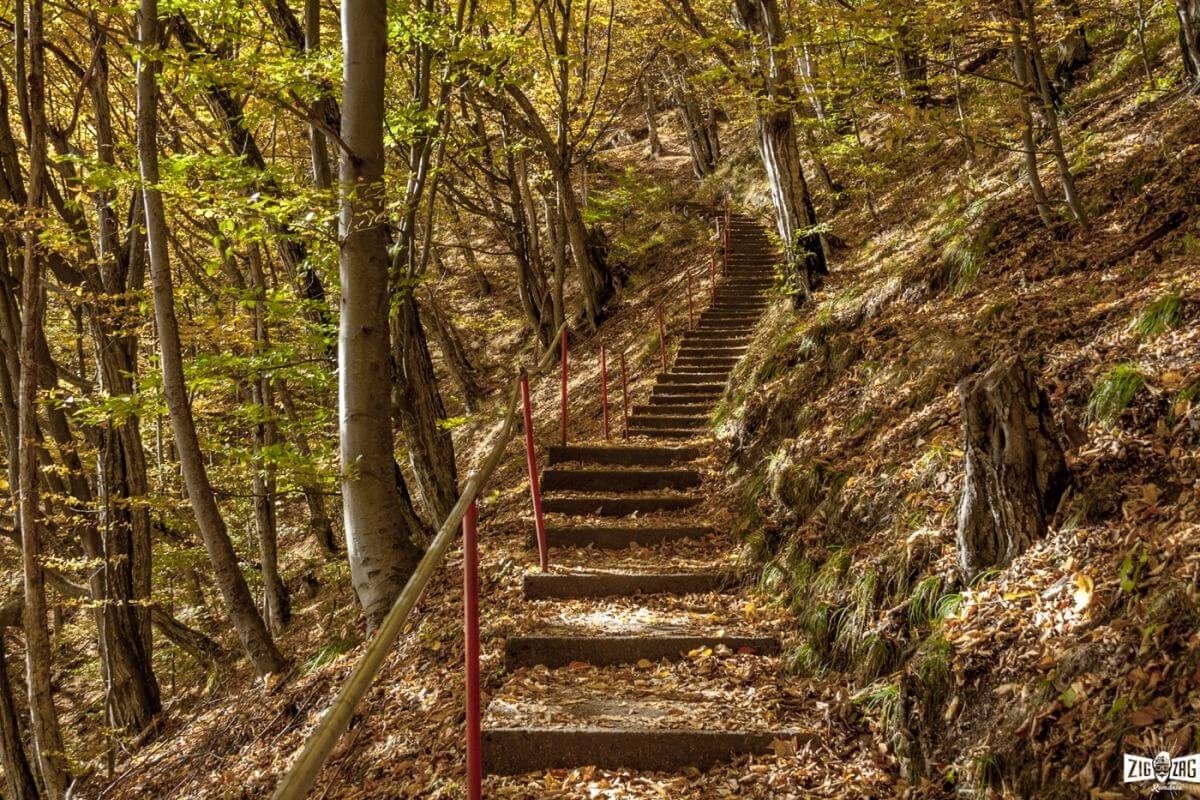
Os visitantes devem subir 1.480 degraus para chegar à Fortaleza Poenari, uma impressionante fortificação situada bem acima da área circundante. As autoridades locais estão considerando construir um bonde (cremaillere) para facilitar o acesso à fortaleza.
Mais sobre o Príncipe Vlad Tepes (Drácula) e seu refúgio nas montanhas dos Cárpatos
» Cetatea Poienari - Museu do Condado de Arges
» Lenda do Drácula
» A escrita de "Nas pegadas de Drácula - Uma jornada pessoal
e Guia de Viagem" por Steven P. Unger
Móveis do século
» Passeios panorâmicos da Romênia - viagens incríveis para destinos únicos!