



Castillos y fortalezas de Rumania
Por favor lea la versión actualizada de esta página en RumaniaTourism.com/ Castillos&Fortalezas
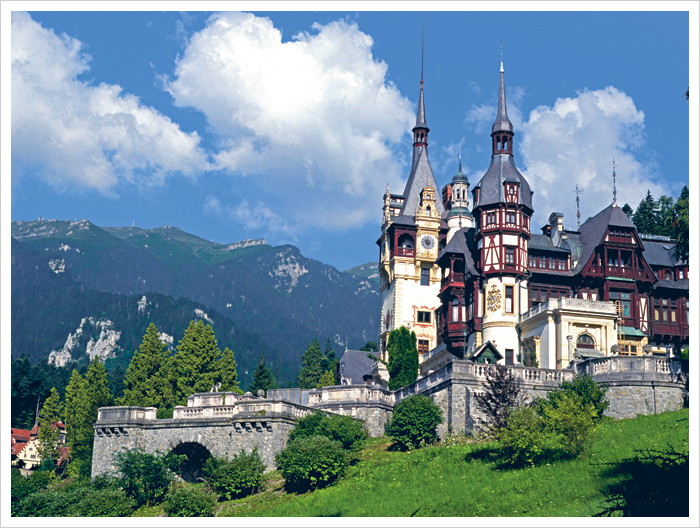
Romania's collection of castles and fortresses perhaps best illustrates the rich medieval heritage of the country. While castles built from the 14th to the 18th centuries are strong and austere fortresses built mainly for defense against invaders, those erected beginning in the late 1800s are imposing and luxurious. The most popular include the 14th century Corvinesti Castle, built on the site of a former Roman camp, the elegant 19th century Peles Castle with its 160 rooms filled with priceless European art and, of course, the Bran Castle, built in the mid-1300s and legendary home to Bram Stoker's Count Dracula.
As a result of almost nine centuries of Saxon presence, Transylvania, located in central Romania, claims a cultural and architectural heritage unique in Europe. This region is home to nearly 200 Saxon villages, churches and fortifications built between the 13th and 15th centuries. Seven of the fortified Saxon churches (in Biertán, Cálnico, Darjiu, Prejmer, Saschiz, Valea Viilor y Viscri) fueron designados por la UNESCO como Patrimonio de la Humanidad. Una visita a estos pintorescos pueblos, ubicados en medio de exuberantes tierras de cultivo y verdes colinas, le permitirá hacerse una idea de la época medieval desaparecida.
Explora algunos de los castillos y fortalezas más conocidos de Rumania:
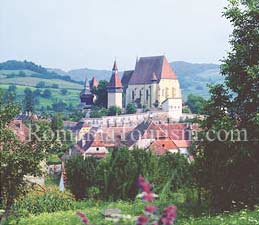
Iglesia fortificada de Biertan
(Patrimonio de la Humanidad por la UNESCO)Ubicación: Transilvania – Rumania central
Ciudad grande cercana: Sighisora (18 millas al este)
Estación de tren más cercana: Dumbraveni
Teléfono: (269) 806.699
Correo electrónico: office@biertan.ro
Web: www.Biertan.ro
El pueblo de Biertan (alemán: Alarma de nacimiento), mencionado por primera vez en un documento oficial en 1283, alberga una de las fortalezas medievales más grandes e impresionantes de Transilvania.
Surrounded by quaint streets and vineyards, the 15th century fortified church at Biertan is perched high on a hill in the middle of the village. Three tiers of 35-foot-high defensive walls, connected by towers and gates, encircled the complex, making the church impossible to conquer during medieval times.
Con una arquitectura del gótico tardío con puertas pesadas y paredes exteriores dobles, la iglesia cuenta con el altar de madera de paneles múltiples más grande de Transilvania y una extraordinaria puerta de madera que alguna vez protegió los tesoros de la sacristía. El altar fue construido por artesanos de Viena (Austria) y Núrenberg (Alemania) entre 1483 y 1513. La puerta, una verdadera maravilla de la ingeniería, tiene un mecanismo de cierre particularmente ingenioso con 15 pernos que se pueden activar simultáneamente con una llave. El mecanismo despertó gran interés en la Exposición Universal de París de 1900.
El órgano de la iglesia tiene unos 1.290 tubos y 25 registros y fue construido en 1869 por la Compañía de Hesse de Viena.
Los visitantes también pueden admirar las torres que rodean la iglesia, a saber, la Torre del Reloj, el Campanario, la Torre de la Puerta y la Torre Bacon. Dentro del terreno hay varios otros edificios interesantes, incluida la Torre de la Prisión, que alguna vez sirvió para brindar asesoramiento matrimonial.
De 1572 a 1867, Biertan fue la sede de los obispos evangélicos sajones de Transilvania; sus hermosas lápidas se pueden ver en el interior de la Torre de los Obispos.
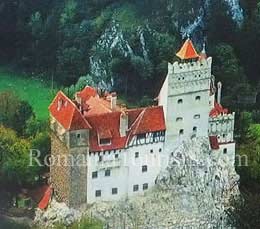
Castillo de Bran
Ubicación:
Transilvania – Rumania Central
Pueblo grande cercano:
Brasov (16 millas al noreste)
Estación de tren más cercana: Braşov
Dirección: Str. Traian Mosoiu 24, Bran
Teléfono: (268) 237.700 o 237.701
Correo electrónico: office@bran-castle.com
Web: www.Bran-Castle.com
Abrir:
1 de mayo - 30 de septiembre
Lunes: 12:00 pm - 6:00 pm
Tuesday - Sunday: 9:00 am - 6:00 pm 1 de octubre - 30 de abril
Lunes: 12:00 pm - 4:00 pm
Tuesday - Sunday: 9:00 am - 4:00 pm
Cargo de admisión: www.Bran-Castle.com/en/Information/Pretul_Biletului
Rodeado de un aura de misterio y leyenda y encaramado en lo alto de una roca de 200 pies de altura, el Castillo de Bran debe su fama a sus imponentes torres y torreones, así como al mito creado en torno a la obra de Bram Stocker. Drácula.
Construido en el lugar de una fortaleza de los Caballeros Teutónicos que data de 1212, el castillo fue documentado por primera vez en un acto emitido por Luis I de Hungría el 19 de noviembre de 1377, otorgando a los sajones de Kronstadt (Brasov) el privilegio de construir la Ciudadela.
Although Stoker never visited Transylvania, the Irish author relied on research and his vivid imagination to create the dark and intimidating stomping ground of Count Dracula, leading to persistent myths that it was once the home of Vlad Tepes, ruler of Walachia. While the association with Dracula is sketchy at best, the castle continues to hold a strong attraction for all fans of the Count.
De 1920 a 1957 Bran sirvió como residencia real, un regalo del pueblo de Brasov a la reina María de Rumania. El castillo es ahora un museo abierto a los turistas que exhibe arte y muebles coleccionados por la reina María.
Estrechas escaleras de caracol conducen a través de unas 60 habitaciones de madera, muchas de ellas conectadas por pasajes subterráneos, que albergan colecciones de muebles, armas y armaduras que datan de los siglos XIV al XIX. El castillo tiene vistas al pintoresco pueblo de Bran, que ofrece una experiencia al aire libre. Museo Etnográfico consta de antiguas casas de pueblo de estilo local con muebles, objetos domésticos y vestuario.
Atracciones cercanas: Fortaleza de Rasnov (7 millas); Braşov (16 millas); Castillo de Peles en Sinaia (56 kilómetros); las estaciones de esquí de Poiana Brasov (10 millas) y Predeal (15 millas); las ciudades medievales de Sighisoara (148 kilómetros) y Sibiu (156 kilómetros); Bucarest (110 millas).
Alojamientos cerca del Castillo de Bran:
http://Carta.ro/Cazare-Bran
http://Carta.ro/Cazare-Moeciu/
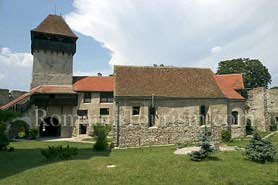
Iglesia Fortificada de Cálnica
(Patrimonio de la Humanidad por la UNESCO)Ubicación: Transilvania – Rumania Central
Ciudad grande cercana: Sibiu (30 millas al sureste)
Estación de tren más cercana: Miercurea Sibiului
Construida en el siglo XIII por el conde Chyl de Kelling, la iglesia fortificada de Calnic (alemán: Kelling) es una de las estructuras defensivas más imponentes de Transilvania. Mencionada por primera vez en un documento de 1269, la fortaleza sirvió como residencia de la nobleza sajona hasta 1430, cuando fue vendida a la comunidad campesina de Calnic.
Enclosed by one and a half rings of high walls fortified with a defensive tower to the south and a gate tower to the north, the fortress withstood several Ottoman sieges. Its defense system was completed in the 16th century when a small Romanesque chapel, surrounding walls and a water ditch were added by the Calnic community.
La Torre Siegfried de cinco pisos de altura, el símbolo de la fortaleza, está dotada de pasillos defensivos y ventanas disparables. Un museo de arte medieval en el lugar exhibe varios artefactos.
Iglesia Fortificada de Cisnadie
Ubicación: Transilvania – Rumania central
Ciudad grande cercana: Sibiu (6 millas al norte)
Estación de tren más cercana: Sibiu
Originally built in the 12th century as a Romanesque basilica, the church was fortified during the 15th century to protect the local Saxon population against repeated Ottoman raids. The fortification process included the construction of fortified towers over the two side entrances and the choir, the building of a double structure of defense walls, a moat and several defensive towers along the walls.
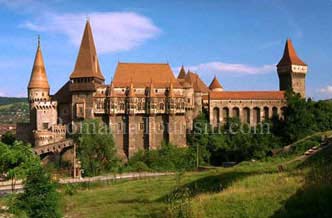
Castillo de Corvinesti
Ubicación:
Hunedoara – Central Romania
Estación de tren más cercana: Hunedoara
Dirección:
Calle. Castellului 1, Hunedoara
Teléfono: (254) 711.423
Correo electrónico: contact@castelulcorvinilor.ro
Web: www.CastelulCorvinilor.ro
Abrir:
(mayo – agosto)
Mar. – Sol. 9:00 a. m. – 6:00 p. m.;
Lun. 9:00 am – 3:00 pm
(marzo – abril)
Mar. - Sol. 9:00 a. m. – 5:00 p. m.;
Lun. 9:00 am – 3:00 pm
(septiembre – febrero)
Mar. - Sol. 9:00 a. m. – 4:00 p. m.; Lun. 9:00 am – 3:00 pm
Cargo de admisión
The greatest Gothic-style castle in Romania, Corvinesti was built by the Anjou family on the site of a former Roman camp. The castle served as a fortress until the mid-14th century when it became the residence of Transylvania's ruler, Iancu de Hunedoara. Iancu upgraded the fortress transforming it into the most stunning castle in Transylvania.
La estructura bellamente conservada cuenta con un suntuoso Salón de los Caballeros, un impresionante puente levadizo, altos contrafuertes, patios interiores, una capilla y unas 50 habitaciones resplandecientes con arte medieval. El patio cuenta con un pozo de 100 pies excavado en piedra.
Iglesia Fortificada Cristiana
Ubicación: Transilvania – Rumania central
Ciudad grande cercana: Sibiu (7 millas al este)
Estación de tren más cercana: Sibiu
The gothic-style Evangelical Church (1495) in the village of Cristian stands on the site of a 13th century Roman basilica. Built in the 16th century, the church is enclosed by two rows of walls guarded by towers. Two underground tunnels allowed villagers to flee from the fortress to the forest or to an old monastery in times of siege.
Iglesia fortificada de Darjiu
(Patrimonio de la Humanidad por la UNESCO)Ubicación: Transilvania – Rumania Central
Ciudad grande cercana: Sighisoara (20 millas al oeste)
Estaciones de tren más cercanas: Saschiz h, Sighisoara
The fortified church at Darjiu was initially built in Roman style in the 14th century, and later rebuilt in gothic style. It was fortified in the 16th century when locals drew inspiration from the fortified churches of neighboring Saxon villages. The Gate Tower preserves its initial form, with openings for shooting missiles; wooden shutters provided protection against incoming projectiles. The original interior frescoes, some of the most impressive Transylvanian medieval works, have been preserved.
El muro alrededor de la iglesia, que servía como defensa contra los ataques otomanos, no era tan alto como los que rodeaban la mayoría de las iglesias fortificadas sajonas, ya que el pueblo en sí estaba situado en lo alto de una colina. Hoy en día sólo queda un pequeño tramo de la muralla construida en 1520.
Los residentes todavía guardan su grano en graneros dentro de la fortaleza, mientras que el tocino y el jamón se guardan en las torres de la fortaleza. Se pueden recoger cereales todas las mañanas, pero tocino sólo una vez a la semana.
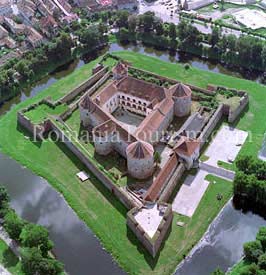
Fortaleza de Fagaras
Ubicación: Transilvania – Rumania central
Grandes ciudades cercanas: Sibiu (44 millas al oeste) y Brasov (45 millas al este)
Estación de tren más cercana: Fagaras
Abierto: mar. – Vie. 9:00 a. m. – 4:00 p. m.;
Sáb. - Sol. 9:00 a. m. – 3:00 p. m.;
Cerrado lun.
Cargo de admisión
Built in 1310 on the site of a former 12th century wooden fortress (burned by the Tartars in 1241), Fagaras was enlarged between the 15th and 17th centuries and was considered one of the strongest fortifications in Transylvania. The fortress was surrounded by a deep moat which, in times of war or social unrest, could easily be filled with water from a nearby mountain brook. A bridge over the moat provided the only access point. The fortress boasts three floors and five towers.
Throughout the years, Fagaras Fortress functioned mainly as a residence for various princes and their families. Transylvanian Prince Gabriel Bethlen (1613-1629), strongly influenced by the Italian Renaissance, brought architects and glassmakers from Italy who rebuilt the fortress, bestowing elegance and beauty to the construction. During the rule of Georg Rákóczi (1630-1649), the castle's fortifications were doubled and the moat was enlarged. Ráckózi had the bastions bridged and covered, the moat paved with stones, the bridge and the casemates repaired and a guardhouse built.
Los registros muestran que el interior debe haber sido lujoso en el siglo XVII; Desafortunadamente, se ha conservado poco de su antigua grandeza. El castillo perdió sus decoraciones y muebles elegantes cuando se convirtió en una guarnición militar en el siglo XVIII.
Hoy en día, la fortaleza bellamente conservada alberga el Museo del condado de Fagaras, que muestra artefactos romanos, una colección de armas medievales y artesanías populares tradicionales. El museo también alberga una hermosa colección de iconos pintados sobre vidrio.
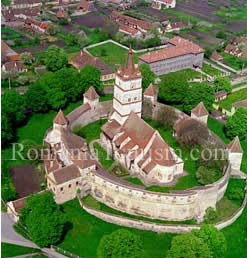
Iglesia Fortificada de Harman
Ubicación: Transilvania – Rumania Central
Ciudades grandes cercanas: Brasov (7,5 kilómetros al sur)
Estaciones de tren más cercanas: Brasov, Prejmer
Ubicado en el corazón de Harman (Honigburgo en alemán, que significa Castillo de Miel), esta iglesia fortificada data del siglo XIII, cuando los sajones construyeron la estructura original. Fuertes muros y baluartes rodearon la iglesia y a sus lados se agregaron enormes torres.
The choir was built in a square shape with a vault resembling a cross. It was surrounded by two chapels, indicating the influence of the Cistercian style. This influence can also be observed in the still-standing original round windows with four lobes in the upper part of the church. The fortified church boasts two chapels.
La capilla sur se conserva en su estado inicial mientras que la capilla norte fue reconstruida en el siglo XV. Las bóvedas exteriores de la capilla están esculpidas en piedra y tienen un rostro humano en cada extremo.
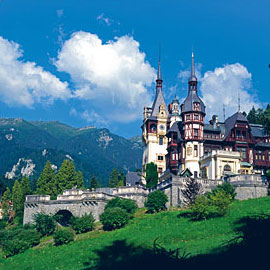
Castillo de Peles
Ubicación: Sinaia – Sur de Rumania
Localidades grandes cercanas:
Brasov (40 millas al norte)
y Bucuresti (80 millas al sur)
Estación de tren más cercana: Sinaia
Dirección: Str. Pelesului 2
Teléfono: (244) 310.918
Correo electrónico: peles.ro@gmail.com
Web: www.peles.ro
Abrir: ( Septiembre a Mayo)
Mié. 11:00 a. m. – 5:00 p. m.;
Jue. – Sol. 9:00 a. m. – 4:00 p. m.; Cerrado lun. y martes.
(mayo a septiembre)
Mar. – Sol. 9:00 a. m. – 5:00 p. m.; Cerrado lun.
Nota: El Castillo de Peles está cerrado durante todo el mes de noviembre.
Cargo de admisión
Ubicado al pie de las montañas Bucegi en la pintoresca ciudad de Sinaia, el Castillo de Peles es una obra maestra de la arquitectura neorrenacentista alemana, considerado por muchos uno de los castillos más impresionantes de Europa.
Encargado por el rey Carol I en 1873 y terminado en 1883, el castillo sirvió como residencia de verano de la familia real hasta 1947. Sus 160 habitaciones están adornadas con los mejores ejemplos del arte europeo, candelabros de cristal de Murano, vidrieras alemanas y paredes cubiertas de cuero cordobés.
El castillo toma su nombre del vecino arroyo Peles, que pasa por el patio.
La primera proyección cinematográfica en Rumania tuvo lugar en 1906 en la Sala del Teatro del castillo.
The furniture in the Music Room is carved of teak, a gift to King Carol I from the Maharajah of Kapurtala in India, while handmade silk embroideries adorn the ceiling and walls of the Turkish Salon. The ceiling paintings and decorative frescoes in the Theater Hall were designed by the renowned Austrian artists Gustav Klimt and Frantz Matsch. Over 4,000 European and Oriental pieces dating from the 15th to the 19th centuries are on display in the armories.
El rey Fernando, que sucedió a Carlos I, encargó el cercano castillo Pelisor, más pequeño y de estilo art nouveau. Las 70 habitaciones del Pelisor cuentan con una colección única de muebles vieneses de principios de siglo y cristalería Tiffany y Lalique.
También vale la pena explorar en la ciudad el Monasterio de Sinaia, fundado por el Príncipe Mihai Cantacuzino en 1695, y que lleva el nombre del gran Monasterio del Sinaí en el Monte Sinaí. El monasterio sirvió como residencia de la familia real hasta que se construyó el castillo de Peles y ahora alberga un establecimiento monástico.
Sinaia, una conocida estación de esquí, y las ciudades circundantes de Busteni, Azuga y Predeal ofrecen muchas instalaciones para unas vacaciones activas, desde rutas de esquí y senderismo hasta observación de vida silvestre.
Atractivos cercanos: Fortaleza de Rasnov (45 kilómetros); Castillo de Bran (35 millas); Braşov (40 millas); las estaciones de esquí de Predeal (22 kilómetros) y Poiana Brasov (56 kilómetros); Bucarest (78 millas); las ciudades medievales de Sighisoara (88 millas) y Sibiu (105 millas).
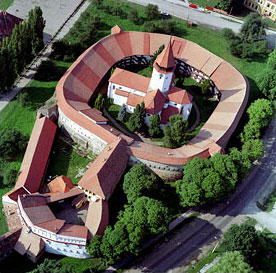
Iglesia fortificada de Prejmer
Sitio del Patrimonio Mundial de la UNESCO)Ubicación: Transilvania – Rumania Central
Ciudades grandes cercanas: Brasov (11 millas al suroeste)
Estación de tren más cercana: Prejmer
La iglesia fortificada más grande del sureste de Europa, Prejmer
(Tartlau in German) was built by Teutonic knights in 1212-1213. The powerful surrounding walls are 40 feet high and 10-15 feet thick. Historical records attest that in its 500 years of existence, the fortress was besieged 50 times. However, it was only captured once, in 1611 by Gabriel Báthori, Prince of Transylvania.
Dotada de bastiones, puentes levadizos y un pasaje subterráneo secreto a través del cual se podían transportar suministros de alimentos, el dispositivo de guerra más famoso de la iglesia era la "máquina de la muerte", hecha de varias armas que podían disparar simultáneamente, causando graves pérdidas al enemigo.
El acceso al edificio se realizaba a través de un pasaje arqueado de 100 pies de largo fortificado con dos filas de puertas. Cada familia del pueblo tenía una habitación designada para refugiarse en caso de ataque. La pared de techo rojo albergaba 272 habitaciones, apiladas en cuatro pisos y unidas por escaleras de madera.
La iglesia, construida en planta de cruz, fue terminada en 1225 y posteriormente adaptada al estilo cisterciense. La nave presenta bóveda de estilo gótico tardío.
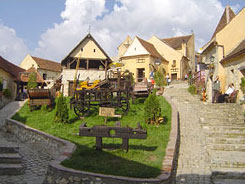
Fortaleza de Rasnov
Ubicación: Transilvania – Rumania central
Ciudades grandes cercanas: Brasov (15 kilómetros al noreste)
Estación de tren más cercana: Brasov
Cargo de admisión
Fortaleza de Rasnov (Rosenau in German), is located on a rocky hilltop in the Carpathian Mountains, 650 ft. above the town of Rasnov. First mentioned in an official document in 1331, the fortress was built by Teutonic Knights as protection against invading Tartars and was later enlarged by the local Saxon population. Strategically located on the commercial route linking the provinces of Transylvania and Walachia, Rasnov differs from other Saxon fortresses in that it was designed as a place of refuge over extended periods of time. As such, it had at least 30 houses, a school, a chapel and other buildings more commonly associated with a village.
El trabajo en el pozo de 470 pies de profundidad comenzó en 1623 y tardó 17 años en completarse. El pozo proporcionaba seguridad adicional, ya que significaba que la gente no tenía que salir por las puertas durante un asedio. Estuvo en uso hasta 1850 cuando se rompió la rueda.
The defensive system included nine towers, two bastions and a drawbridge. Surrounded by 500-foot-slopes on the north, south and west sides, the fortress was obliged to surrender only once, in the year 1612 when invaders managed to find the secret route that supplied the people inside the fortress with water. With the location of their water supply no longer a secret, the need for a well inside the fortress became a must.
The last siege of Rasnov Fortress took place in 1690 during the final Ottoman invasion of Transylvania. Damaged by fire in 1718, it was rebuilt the following year. The next major damage occurred as the result of an earthquake in 1802. The fortress was last used as a place of refuge during the revolution of 1848 and was abandoned after that.
Recientemente, la antigua fortaleza ha sido restaurada a su antiguo esplendor y hoy puedes visitar los impresionantes restos. También hay un museo aquí, escondido detrás de los antiguos muros, donde puedes encontrar un esqueleto enterrado bajo un piso de vidrio, así como algunos otros artefactos interesantes.
Las habitaciones interiores son como un laberinto, con varias escaleras de madera que las unen y algunos de los llamados pasadizos secretos que deberían mantenerte ocupado durante bastante tiempo.
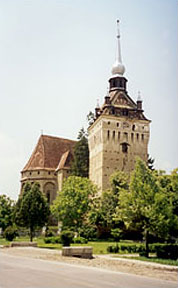
Iglesia Fortificada de Saschiz
(Patrimonio de la Humanidad por la UNESCO)
Ubicación: Transilvania – Rumania Central
Ciudad grande cercana: Sighisoara (10 millas al oeste)
Estación de tren más cercana: Saschiz h
Teléfono: 744 020.337
Web: www.saschiz.ro/en/index.htm
Saschiz es famoso no sólo por albergar una de las mejores iglesias fortificadas de Transilvania, sino también por ser un centro de carpintería y pintura en madera. Fue aquí donde nació la cerámica azul de Saschiz en 1702.
The Evangelical Church of Saschiz was built between 1493 and 1496 by Saxon colonists. The monument is very impressive due to its sheer size and the way the fortifying elements have been adapted to the shape of a church building. From the outside, the church appears to be a bulwark, but its defensive role is surpassed by the beauty of its gothic elements: huge arches, massive buttresses and decorative stone and brick aspects. Due to the significant distance between the center of the village and the hill on which a Saxon fortress was built in 1496, the fortified Evangelical church became the main refuge for the inhabitants of Saschiz during invading raids.
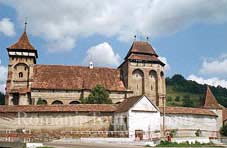
Iglesia Fortificada de Valea Viilor
(Patrimonio de la Humanidad por la UNESCO)
Ubicación: Transilvania – Rumania central
Pueblo grande cercano: Medias (13,5 kilómetros al noroeste)
Estación de tren más cercana: Copsa Mica
Located in the Vineyards Valley, this fortified church was built in 1263 in gothic style and was enlarged and fortified in the 15th and 16th centuries by adding a range of 26-foot-tall and five-foot- wide walls. A unique element is the well in the center of the church choir that provided water for the locals during sieges. Inside, you can admire Saxon furniture dating from the 16th century.
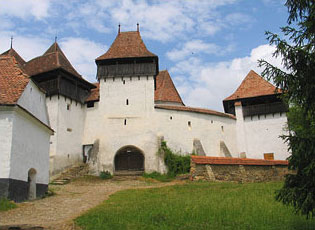
Iglesia Fortificada de Viscri
(Patrimonio de la Humanidad por la UNESCO)
Ubicación: Transilvania – Rumania central
Ciudad grande cercana: Sighisoara
(25 millas al noroeste)
Estación de tren más cercana: Rupea
Una de las iglesias fortificadas sajonas más interesantes se encuentra en el pueblo de Viscri (Weisskirch en alemán). El nombre proviene del alemán. Weisse Khirche, es decir blanco iglesia.
Unlike other Transylvanian fortified churches, Viscri was built around 1100 by the Szekler population and taken over by Saxon colonists in 1185. This explains why this unique gothic church displays a plain straight ceiling rather than a traditional vaulted one. In the 14th century, the eastern section was rebuilt and around 1525, the first fortification walls with towers were added. In the 18th century, the church was endowed with a second defensive wall. Inside, you can admire a classic 19th century altar featuring a Blessing of the Children centerpiece by the painter J. Paukratz from Rupea. During 1970-1971, the fortified church underwent major renovations.
Principales castillos y fortalezas