| Datos breves sobre la fortaleza de Biertan | |
|---|---|
| Ubicación: | pueblo Biertan, Transilvania – Rumania central |
| Dirección: | Piata 1 de diciembre de 1918, nr. 2 |
| Ciudades grandes más cercanas: | Medias (16 millas al oeste), Sighisoara (18 millas al este) y Sibiu (45 millas al noreste) |
| Estación de tren cercana: | Dumbraveni (8 millas al norte) |
| Horas:* | Martes - Domingo: 10 a.m. — 1 p.m. y 2 p. m. – 7 p.m. |
| Admisión: | 10 leus |
| Correo electrónico | Teléfono: (+4) 0749 231.199 |
Pueblo Biertan (alemán: Alarma de nacimiento), en Transilvania,
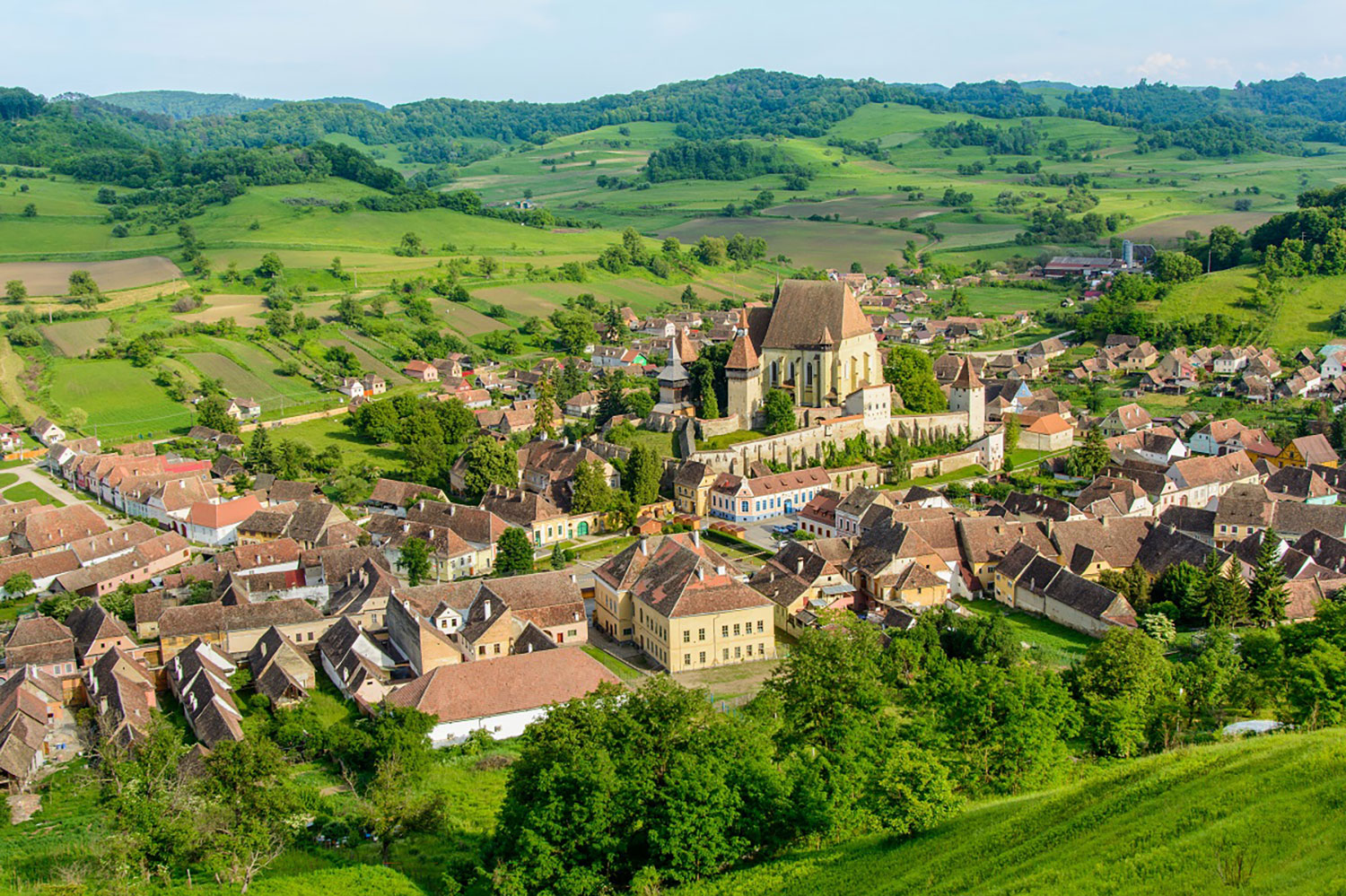
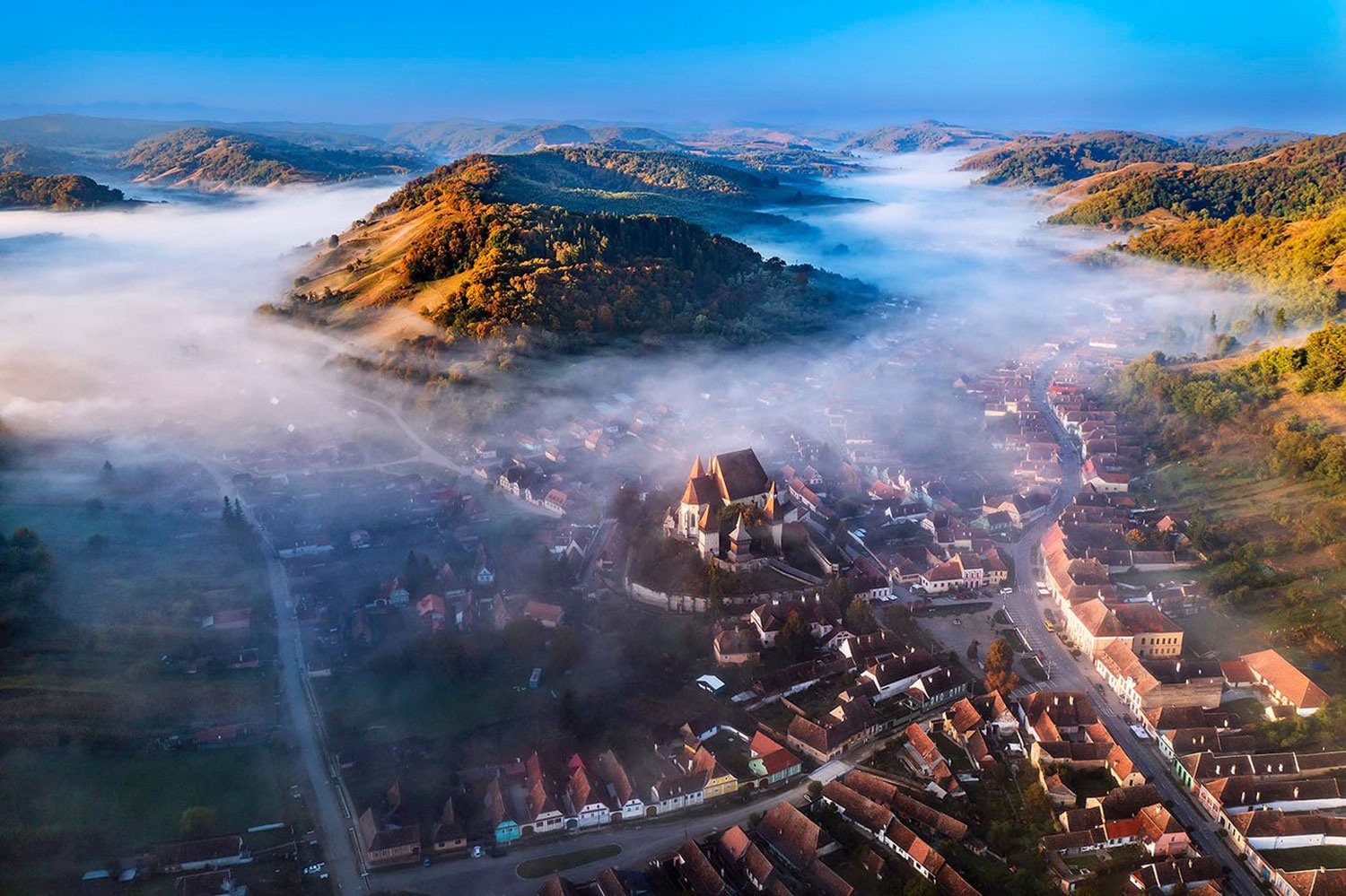
alberga una de las fortalezas medievales más grandes e impresionantes de Transilvania.
Surrounded by vineyards, the 15th century fortified church at Biertan is perched high on a hill in the middle of the village.
Three tiers of 35-foot-high defensive walls, connected by towers and gates, encircled the complex,
making the church impossible to conquer during medieval times.
From 1572 until 1867, Biertan was the seat of the Saxon Evangelical bishops of Transylvania.
Sala de terapia de pareja Biertan / Prisión conyugal
Tucked away in the church grounds, along one of its fortification walls, there is a small room, barely larger than a pantry, known as the ‘marital prison’. For more than 300 years, couples who approached the local bishop to seek a divorce would be sent here, for a maximum of six weeks, to iron out their issues and avert a divorce. If the couple started to see eye to eye once more, they could leave after only two weeks. As the intention was for the couple to share absolutely everything, the frugal furnishings included only a table, one chair, one traditional Saxon bed, a single pillow, one plate and one spoon. Church’s records confirm the effectiveness of this Saxon custom: there has only been one divorce, in the area, during the 300 + years of the prison’s use.
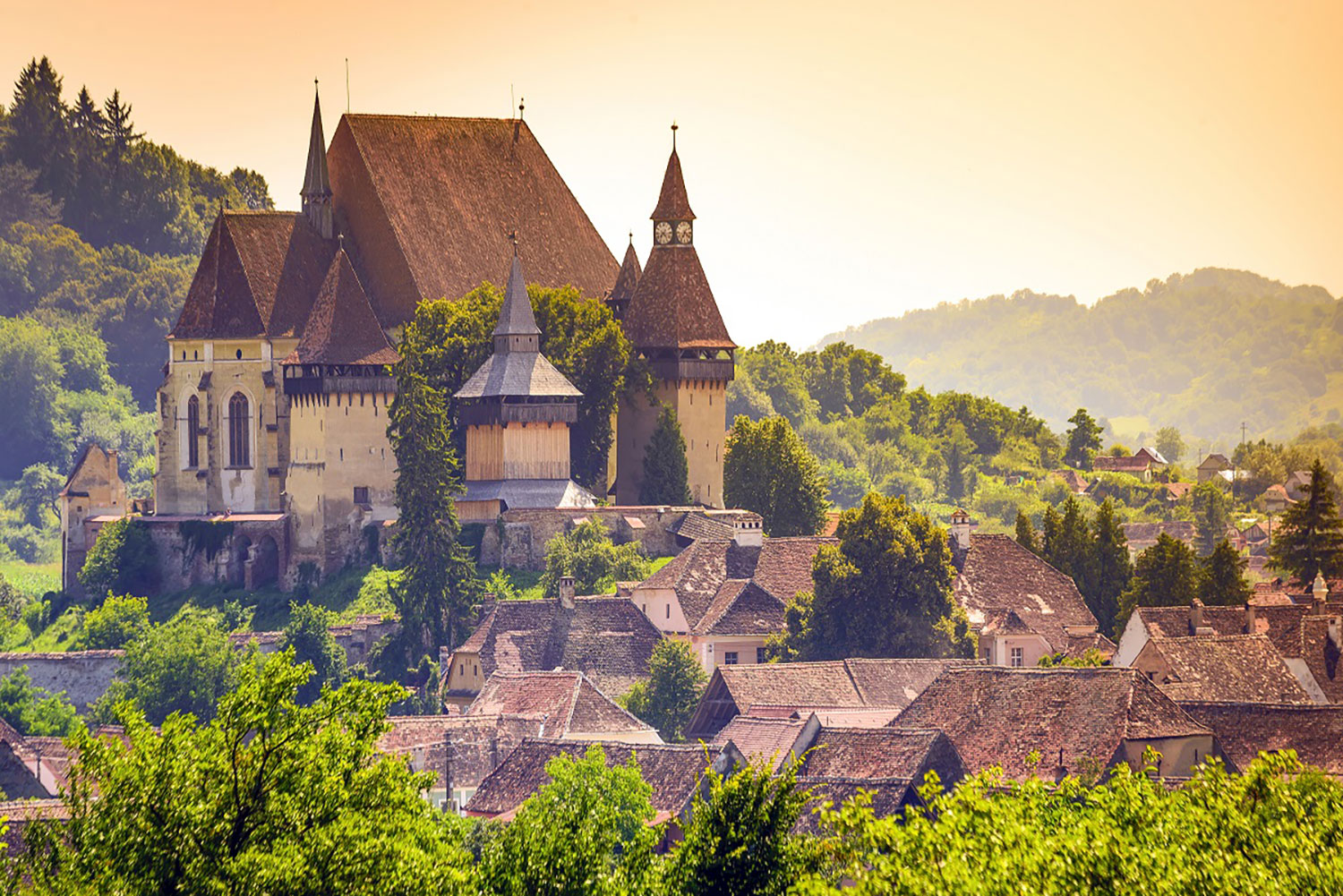
Con arquitectura de estilo gótico tardío con puertas pesadas y paredes exteriores dobles,
La iglesia cuenta con el altar de madera de paneles múltiples más grande de Transilvania y una notable y enorme puerta de roble que,
Durante siglos, protegió los tesoros de la sacristía.
El altar fue construido por artesanos de Viena (Austria) y Núrenberg (Alemania) entre 1483 y 1513.
En 1898, en la Exposición Mundial de París, este complejo sistema de cerraduras recibió un premio por su ingenioso diseño.
El órgano de la iglesia cuenta con unos 1.290 tubos y 25 registros; Fue fabricado en 1869 por la Hessian Company de Viena.
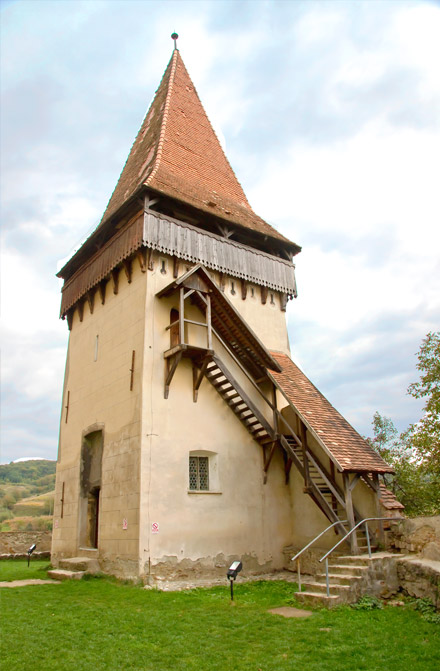
Visitors can also admire the imposing defending towers surrounding the church, namely the Clock Tower,
the Bell Tower, the Gate Tower and the Bacon Tower.
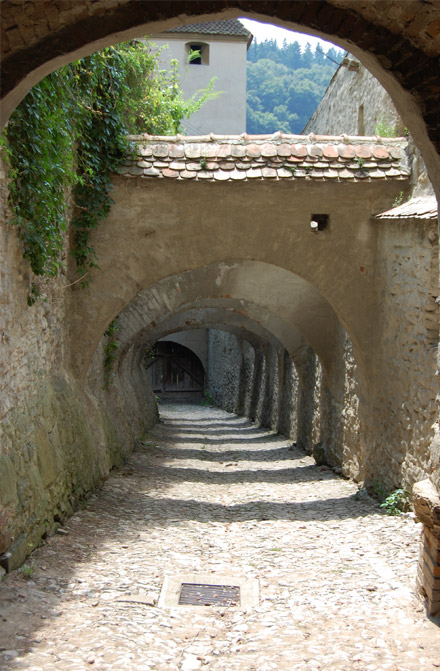
Within the grounds are several other interesting structures, built for various purposes,
including a covered stair that leads to the church built on the highest point of the fortress.
En 1775, se encontró un objeto votivo cristiano de bronce del siglo IV, tres millas al sur de Biertan.
Realizado en bronce con forma de Lábaro, el Donarium tiene un grabado en latín que dice "Ego Zenovius Votum Posvi",
("I, Zenovius, offered this gift"). The Donarium, today on display at the Museo Bukenthal en Sibiu, atestigua que la población de la actual Rumania se hizo cristiana durante la época de Constantino el Grande, mucho antes de las invasiones eslavas.
La reunión anual de los sajones de Transilvania (Întâlnirea Saşilor),
en Biertan tiene lugar la reunión más grande de sajones que emigraron o todavía viven en Transilvania.