

Catedral Curtea de Arges Hechos e Historia
En 1515, el Príncipe Neagoe Basarab, voivoda del Principado de Valaquia, commissioned a church, like no other. To to make his wish a reality, he invited to Curtea de Argeș, then the capital of Walachia, the most skilled architect in the Ottoman Empire: Manoli of Niaesia. Manoli (Manole) was a brilliant Armenian who had built several mosques in Constantinople / Istanbul. Prince Basarab never anticipated that, for a short time, Curtea de Argeș will become the center of European architectural innovation.
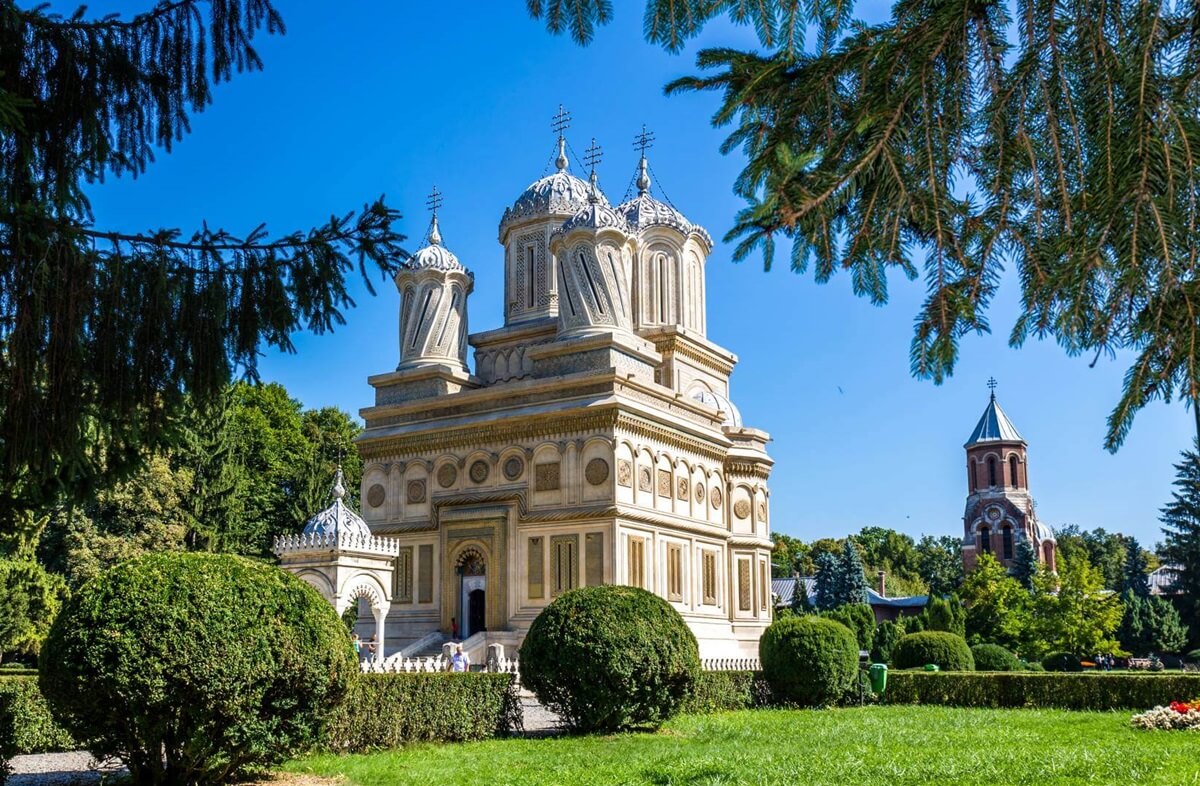
Written records attribute the concept of the building to the Prince Neagoe Basarab himself. During his youth, the prince allegedly spent time in Constantinople and became familiar with Middle Eastern architecture. Prince Neagoe Basarab, with Manoli and his team, created the first hybrid religious architecture style in Europe: a Byzantine in layout with Armenian, Georgian, and Ottoman decorations. It was something entirely new, unseen in the known world, a true architectural revolution. The original architecture of cathedral Curtea de Arges inspired for centuries that of many other places or worship, but none came even close to it.
The construction of the cathedral was completed in record time – just three years.
The Patriarch of Constantinople, Teolipt, was present at the consecration ceremony on August 15, 1517.
Other important figures present at the ceremony included the Mount Athos Holy Community (council)
and the entire clergy of Wallachia.
The fact that for the first time, in history, a Patriarch of Constantinople set foot on Romanian soil
was a confirmation of the unity of Orthodoxy in a way that had never been seen before.
La iglesia se convirtió en Catedral Obispado en 1793, parte de un gran conjunto monástico.
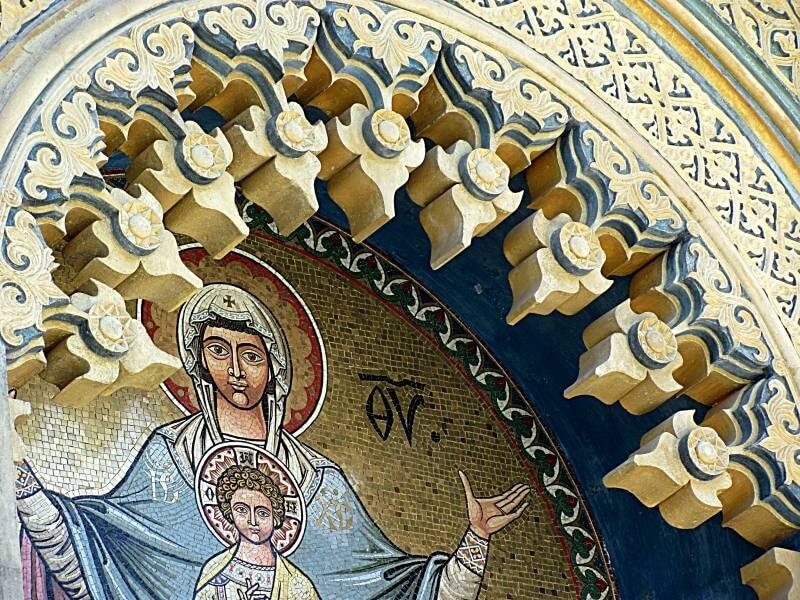
La arquitectura única de la catedral Curtea de Argeș ilustra el espacio artístico interrelacionado que se extendía desde Europa del Este y el Imperio Otomano hasta Rusia, el Cáucaso y más allá hasta Asia Central.
La arquitectura y la decoración de la catedral de Curtea de Arges han despertado admiración desde las primeras crónicas y relatos de viajeros.
En 1654, Pablo, el archidiácono de Alepo (Pablo de Alepo), un clérigo y cronista ortodoxo sirio otomano,
Escribió que la catedral era "una de las maravillas del mundo".
Words of high praise were also written, in 1794, by Sir Robert Ainslie, the British ambassador to the Porte (1776-1794),
and later, by French painter and illustrator Louis Bouquet (of the most brilliant French decorators in the inter-war period) and,
French lithographer, engraver and illustrator Dieudonné Auguste Lancelot (1860).
Their travel notes and prints spread the fame of the cathedral beyond the borders of Romania.
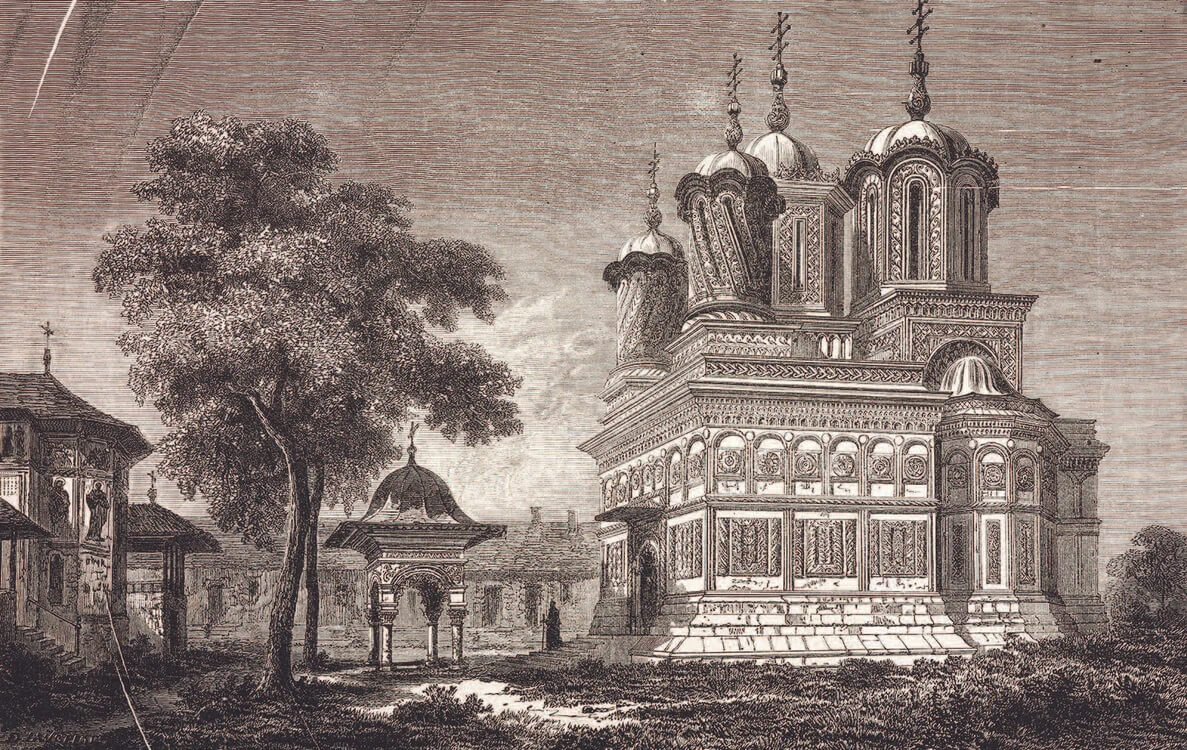 Monasterio de Curtea de Arges, litografía de 1860 de Dieudonné Auguste Lancelot, foto © Wikimedia Commons
In 1867, at Paris Universal Exhibition, the cathedral Curtea de Arges stood as one of the most representative landmarks of Romania and a symbol of the new Romanian state. The church represented one of the main references of Romanian religious architecture: in 1878, it was called “the main title of glory of the Romanian arts of the past”.
A lavish restoration of the cathedral Curtea de Argeș was commissioned by King Carol I in 1875 when the king asked French architect André Lecomte du Noüy to recondition the cathedral. Works supervised by du Noüy included changes to the interior structure and the replacement of the original fresco with vividly-colored neo-Byzantine ones. A grand Episcopal Palace was constructed 200 feet away from the cathedral.
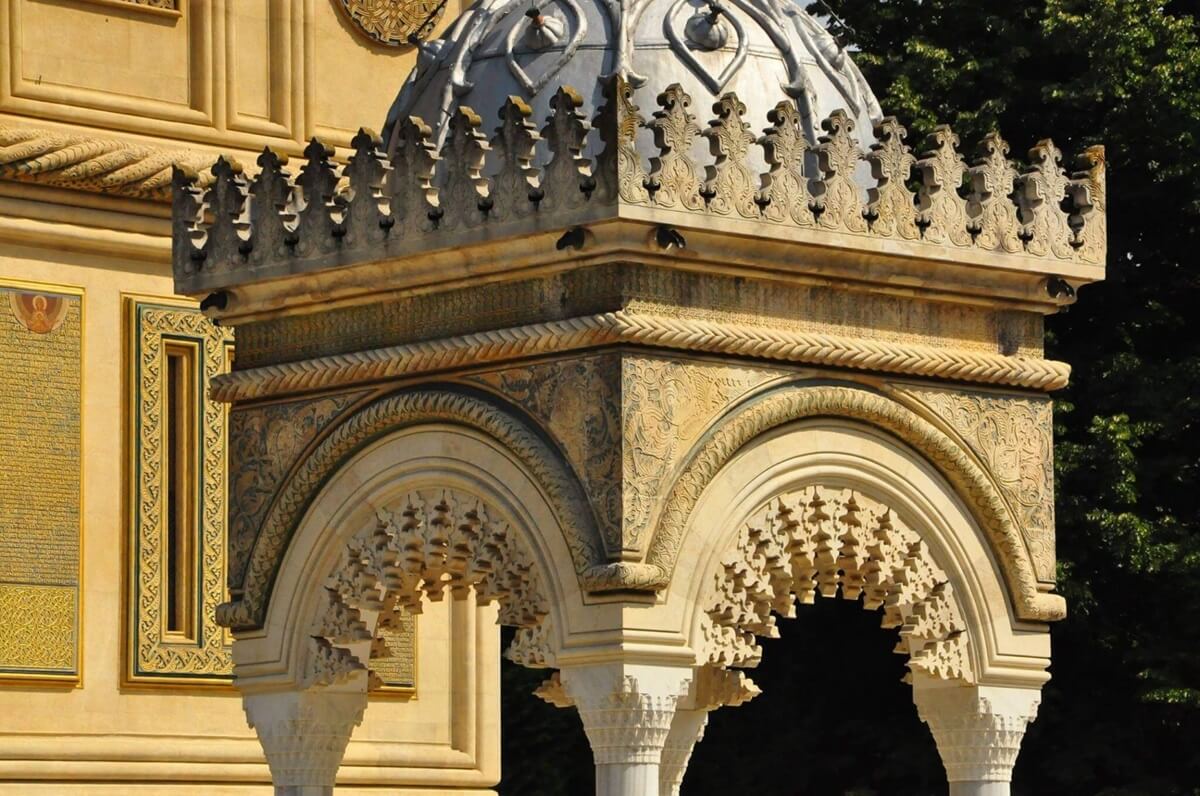
Poco después de finalizar las obras de restauración, en 1886, El rey Carol I designó la Catedral de Curtea de Argeș como necrópolis real.
El exterior
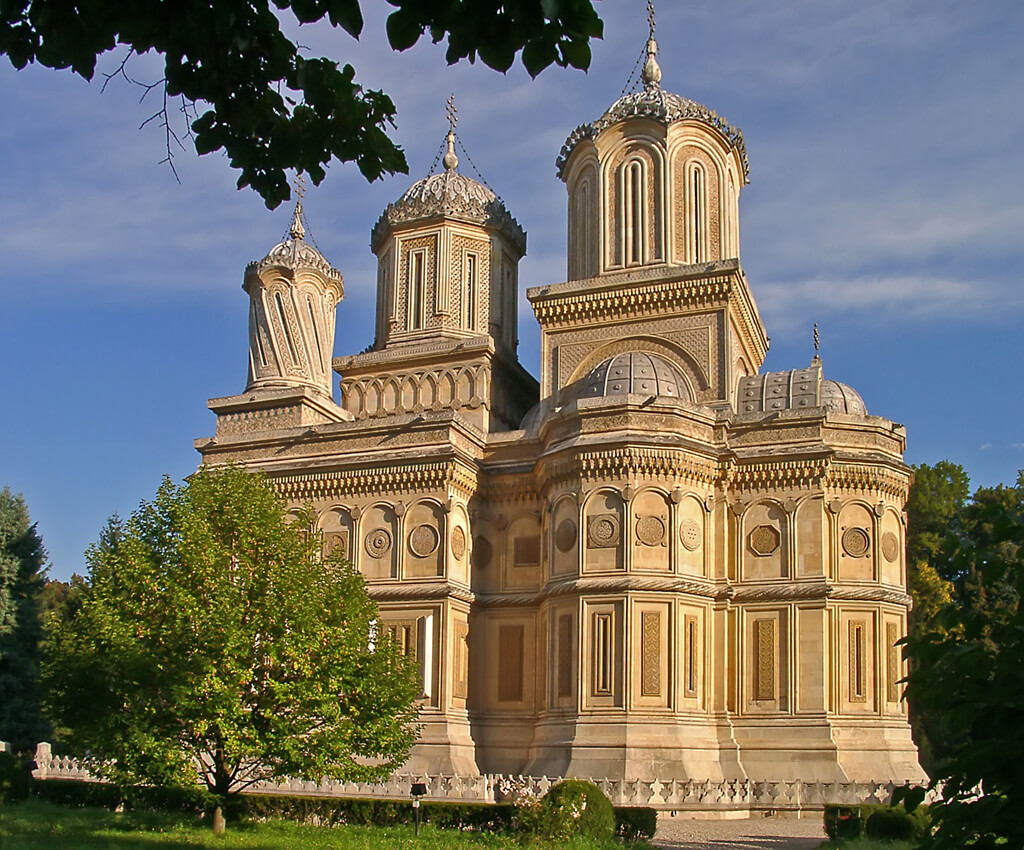
La catedral de Curtea de Arges, de 59 pies de largo, 33 pies de ancho y 82 pies de alto, fue una de las construcciones más impresionantes de su época.
Las fachadas de piedra caliza de color beige están decoradas con relieves planos con motivos caucásicos e islámicos.
Un cordón medio ricamente tallado (brâu en rumano) rodea la fachada y la divide en una parte inferior y otra superior.
La parte inferior presenta estrechas ventanas con marcos de piedra ricamente decorados,
interrumpido por losas de mármol blanco o decorado.
The upper part is marked by a row of blind arcades (contiguous arches), each containing a large decorative stone disc.
Another row of smaller decorative discs is displayed where the arches meet.
Each disc features an unique decorative motif.
The upper part of each small disc features a bronze bird which holds a small bell in its beak.
The birds on the facade were not just decorative.
According to a medieval chronicler, the wind made the birds whistle and the small bells beneath them chime,
creating a unique atmosphere around the building.
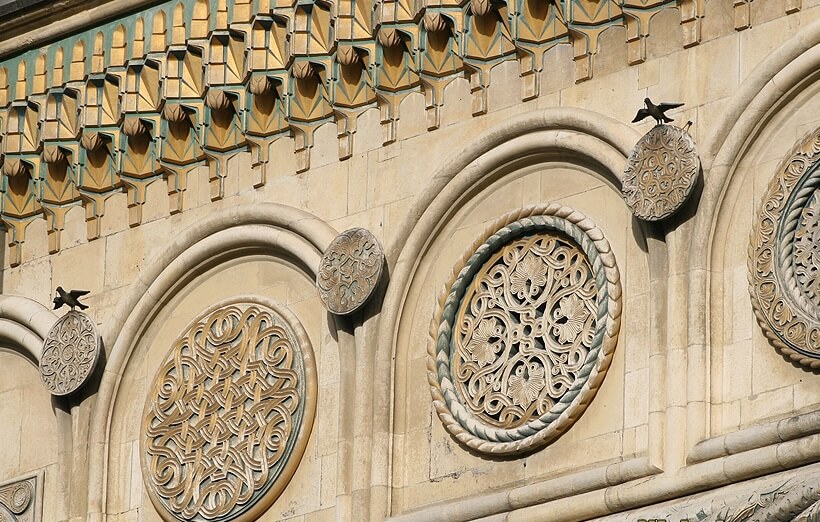
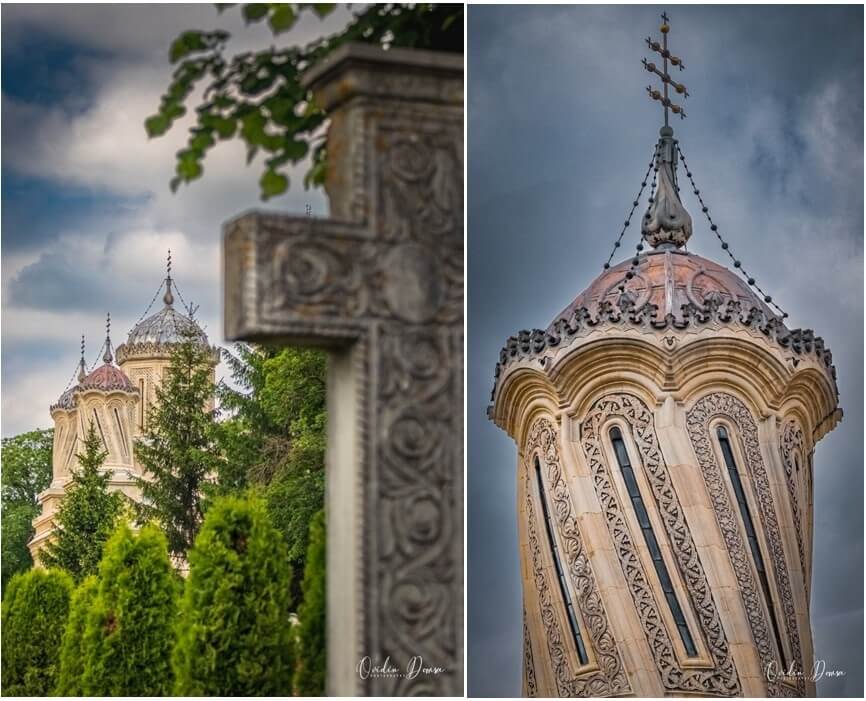
La cornisa del techo está marcada por ornamentos tipo mocárabes, que son el inicio de riquísimas tallas en piedra, que cubren toda la parte superior de la iglesia, incluyendo el tejado y las cuatro torres. La estructura de la iglesia se levanta en una serie de volúmenes y superficies, sobre las que se levantan las cuatro torres. The towers display the richest decorations, especially along the very thin windows, and culminating with the curved windows and window frames of the smaller towers that give them the unique, twisting impression. The rare ornamental richness, like lace in relief, include a number of elements of Arabic and Georgian art skilfully harmonized. (Attribution: Princeton.edu)
El interior
The interior of the cathedral is adorned with oil frescoes by painters
Emile-Frédéric Nicolle (francés),
Charles Paul Renouard (French),
and Nicolae Constantinescu (Romanian, born in Curtea de Argeș).
Other decorative elements that draw attention and are considered exceptional sculptural achievements
include the votive panels, the altar made of marble, gilded bronze, and onyx,
the mosaic icons and the group of 12 columns representing the 12 Holy Apostles.
Each column, originally decorated with floral motifs, is carved from a single block of marble.
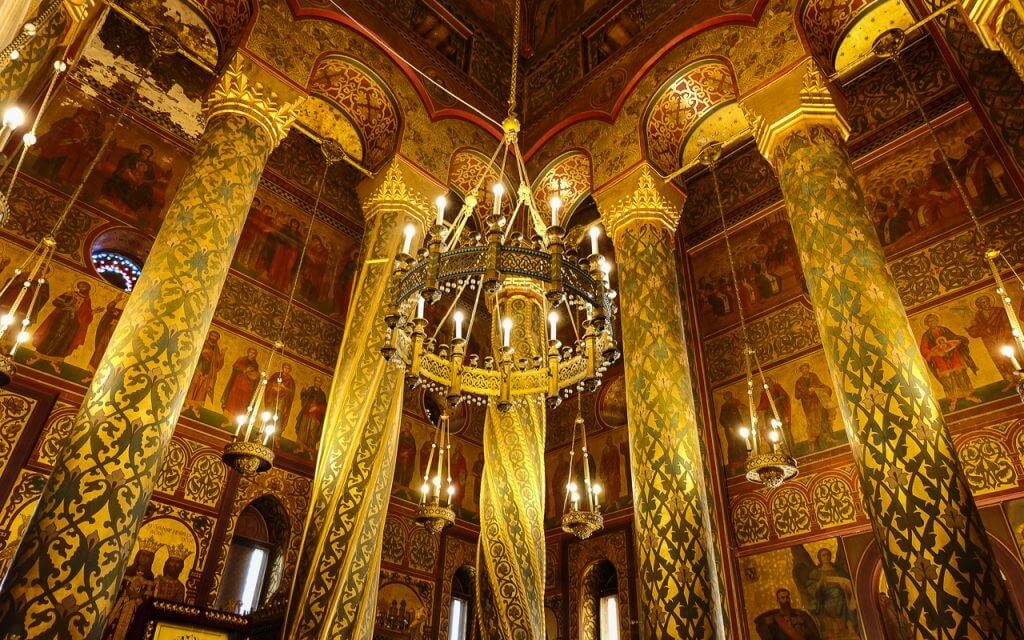
The nave is surrounded by three apses, the central one serving as the altar, and bearing the eastern tower, the highest, in the middle. Unusual for an Orthodox church, the narthex is larger than the nave. It is square-shaped and another smaller square is formed in the middle by twelve columns that support a second central tower and two smaller and twisting western towers.

The enlarged narthex was designed to host princely graves, namely that of Neagoe Basarab, his immediate family members and successors. But it was most probably also the setting for an original religious scenography, with chairs and double-sided icons (four of them still existing) placed between the twelve columns.
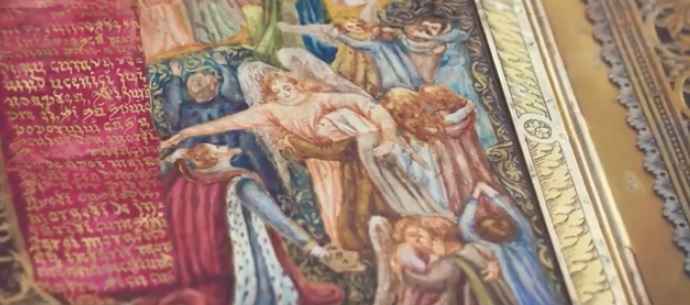
Contiene los doce Evangelios leídos el Jueves Santo, así como el Evangelio de la Resurrección del Sábado Santo. El Códice, grande y ricamente decorado, fue pintado sobre pergamino y escrito con letras doradas y plateadas. por la propia reina Isabel de Rumania.
...
Catedral Curtea de Arges Leyendas
La Catedral Curtea de Arges es escenario de dos cautivadoras leyendas:
~ La creación de la destacada estructura bizantina (Legenda Mănăstirii Argeșului),
desarrollando el tema del sacrificio por el arte
y
~ El desafortunado destino del Gran Maestro Manoli (Legenda Meșterului Manole),
a variation of the Icarus myth.
Leyenda de la creación de la Catedral de Curtea de Arges
Everything Manole and his team built during the day fell apart during the night.
No matter how much they tried they couldn't go ahead with construction.
One night Manole dreamed that the only way that he could complete the cathedral was with a human sacrifice.
Specifically, the first woman to appear the next morning must be immured within the cathedral walls to appease unknown forces.
Manole told his masons about his dream, and they all agreed to act according to the Grandmaster’s dream.
Since the site for the cathedral was remote, the only people coming by were the workers’ family.
Shortly after Manole and his team agreed to sacrifice the first woman who came to the construction site,
Manole looked over the hills and caught glimpse of his pregnant wife, Ana, coming to bring him lunch.
He prayed to God to start a strong storm that would make her to return home.
But Ana’s determination to bring food to her beloved husband kept her going.
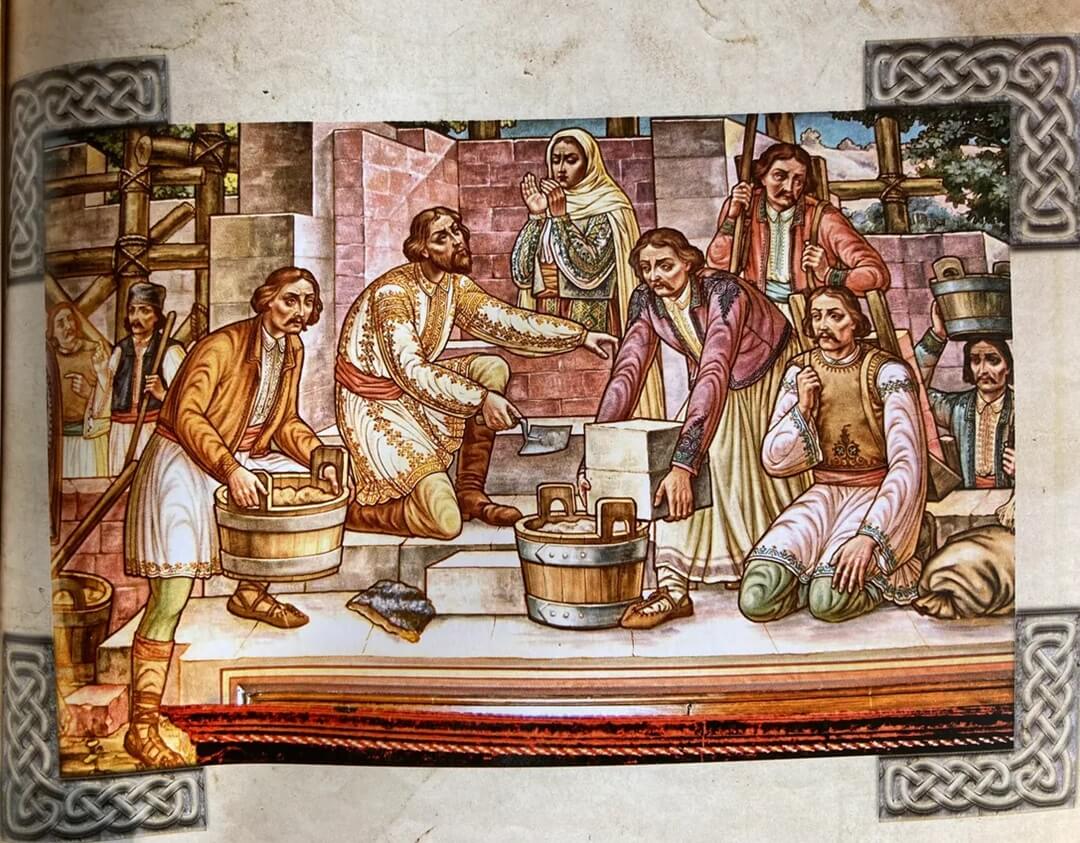
Manole kept praying but neither the strong wind nor the torrential rain could stop Ana to reach the construction site.
When she arrived, Manole and the other builders told her that they wanted to play a little game,
which involved building walls around her body.
She accepted but soon she became uncomfortable and implored Manole to stop.
Although Ana begged for her life and her unborn child but Manole kept walling his wife brick by brick.
Con el corazón roto y lágrimas en los ojos, y,
Sin decir una palabra, Manole encerró a su esposa en el muro sur de la catedral.
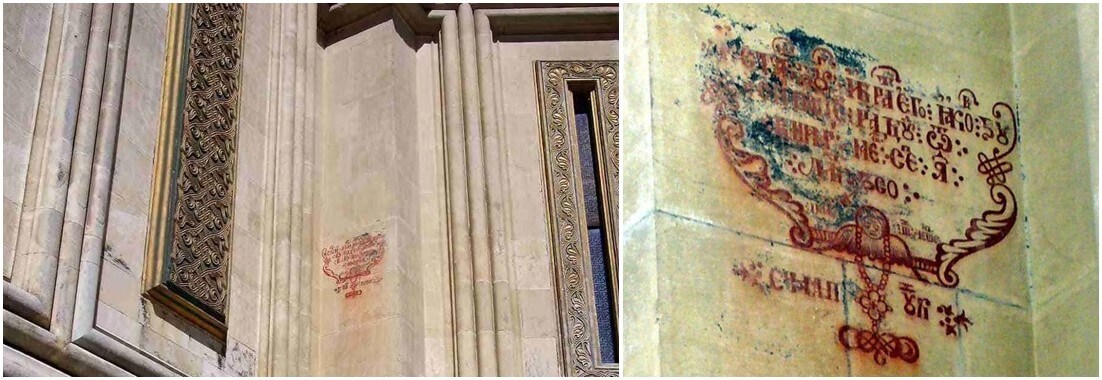
Una marca roja en la pared sur de la catedral marca el lugar donde estaba encerrada la esposa de Manole, en el edificio.
...
El desafortunado final del Gran Maestro Manoli
Otra leyenda habla del fin de Manole, provocado por los celos.
When the cathedral was almost completed, and Manole and his craftsmen were doing roof's finishing touch,
prince Neagoe Basarab asked Grandmaster Manoli if he could build an even more beautiful church.
Manole answered he could.
Because the prince wanted to make sure that nothing to match his stunning cathedral would ever be replicated,
he ordered his men to remove the scaffolds and Manoli and his team were left stranded on the roof.
Sin medios para bajar del tejado, Manoli y sus hombres decidieron utilizar tejas de madera.
para hacer alas como de pájaro y llegar al suelo.
Sin embargo, su intento fracasó y todos los artesanos murieron al llegar al suelo.
La leyenda también dice que, milagrosamente,
Un manantial de agua apareció en el mismo lugar donde supuestamente Manoli aterrizó y murió.
la primavera (Fantana lui Manole) está ubicado a 690 pies al oeste de la entrada a la catedral,
en un pequeño parque llamado Manole's Spring.
Los lugareños y visitantes sedientos pueden beber agua directamente del manantial.
...
Planifica tu visita a Curtea de Arges
How to reach Curtea de Arges, de Bucarest
Coche:
Carretera 1 (Autopista A 1),
Bucharest -- Pitesti -- Curtea de Arges,
Curtea de Arges se encuentra a 96 millas al noroeste de Bucarest, 84 millas al suroeste de Brasov y 86 millas al sur de Sibiu.
Desde Curtea de Arges el visitante puede continuar hacia:
Brasov, vía Campulung Muscel → Rucar -- Paso de montaña de Bran → Castillo de Bran (Drácula) → Fortaleza de Rasnov
o a
Sibiu, a través del
TransFagarasan carretera panorámica, (Fortaleza Poenari → Presa Vidraru → Lago Balea)
(el TransFagarasan está cerrado de noviembre a junio)
o por la carretera panorámica del río Olt (Valea Oltului).
Tren:
terminal de tren más cercana Curtea de Arges,
(tiempo de viaje en tren desde/hacia Bucarest: 3 horas y 30 minutos)
Autobús:
Los autobuses Bucarest hacia Curtea de Arges salen desde Autogara Militari (dirección: Str. Valea Cascadelor 1 - Bucarest),
(bus and mini-bus travel time from/to Bucharest: 2 hours and 30 minutes)
Alojamientos cerca de Catedral Curtea de Arges
| Nombre del hotel | Clase | Ubicación |
|---|---|---|
| Posada | 4 estrellas/escala media | 0.3 millas al sur |
| Casa Domneasca | B&B | 1,2 millas al sur |
| Curtea Veche | B&B | una milla al norte |
| Hotel THR | 3 estrellas/escala media | 1,1 millas al sur |
| Pensiunea Prestigio | B&B | 0.6 millas al norte |
Atracciones en o cerca de Curtea de Arges
• Museo Municipal de Curtea de Arges,
• Pintor Dumitru I. Colección de Arte Norocea,
• la Iglesia Principesca (Biserica Domneasca) -
una iglesia bizantina de estilo renacentista paleólogo -
la residencia voivodal más antigua de
Valaquia (sur de Rumania).
Las pinturas interiores de la Iglesia Principesca datan de la década de 1360.
Uno de los frescos representa a la Virgen María embarazada.
El único fresco similar se puede ver en el Monasterio de Chora en Estambul, Turquía.
•
Fortaleza Poenari
- prince Vlad the Impaler (Draculea) refuge in the Carpathian Mountains
• Carretera panorámica de la presa Vidraru y TransFagarasan