
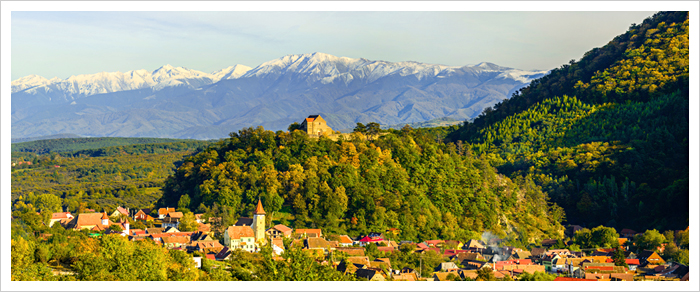
Es fácil evocar imágenes de Drácula durante los meses fríos que rodean Halloween, pero ¿sabías que es fácil conocer el Drácula de Bram Stoker en cualquier momento del año cuando lo visitas? Rumania. Con un aura de misterio que rodea la región de Transilvania del país, los lugareños juran que la sensación espeluznante del área se debe a que se encuentra sobre uno de los campos magnéticos más poderosos de la Tierra. Aparentemente eso fue lo que llevó a Stoker a escribir también sobre el área.
While Stoker's Dracula really is just a loose legend that was inspired by a man named Vlad Tepes (nicknamed Vlad the Impaler and Count Dracula) it hasn't stopped folks from making up stories. Stories that are still whispered at restaurants and pubs even today – and the locals don't mind telling those stories either.
Castillo en la colina
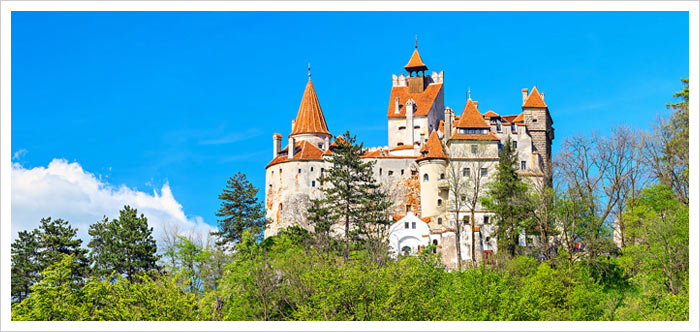
Sentado sobre una roca de 200 pies de altura Castillo de Bran is the epitome of the story of Dracula. Driving up to the imposing towers and turrets will definitely throw you back into another place and time. The castle was built in 1212, but today it holds a strong pull for fans of all things Dracula as it's the castle Stoker used in his book. It's easy to tour the castle on your own, but expect to spend half the day and keep in mind there are always crowds. For the most part you'll wind through narrow staircases connecting over 50 rooms in the castle and then there is a chance to tour the underground passages. Only one room in the castle actually highlights the myth of Dracula and it is dedicated to Bram Stoker presenting both the legend of Vlad Tepes and the myth of Dracula.
Atrévete a Visitar
Aunque el pueblo de Sighisoara is 88 miles from Bran Castle, it is here that the heart of the Count Dracula legends really reside. Sighisoara was founded in the 12th century by Transylvanian Saxons, but it's Dracula that has put the town on the map with visitors. Designated as a World Heritage Site by UNESCO, the town is full of cobbled streets and ornate churches and is the birthplace of Vlad Tepes or Vlad Dracula; the title translated to mean the son of Dracul.
Vlad nació en la ciudad y gobernó la zona desde 1456 hasta 1462. Todavía puedes visitar su casa natal, aunque hoy es un restaurante y un museo. El Casa Vlad Dracul is in Citadel Square, close to the Clock Tower, and is where he was born. The ground floor of the house is a restaurant serving typical Romanian food for a fair price and is also home to the Museum of Weapons. For Dracula aficionados the cobblestone streets are lined with souvenir shops offering all kinds of Dracula trinkets to take home.
En la ciudad de Targoviste el siglo XIV. Corte principesca todavía está abierto a los visitantes, pero espero que no te inviten a una fiesta de celebración. Esta era la capital de la región que Vlad gobernó durante su tiempo y se decía que el Conde había empalado a muchos súbditos desleales después de invitarlos primero a una celebración festiva. el cercano Atalaya Chindiei tiene una exhibición que vale la pena visitar destacando la vida real de Vlad Tepes (en caso de que quieras ir más allá de la leyenda y descubrir quién era realmente el hombre).
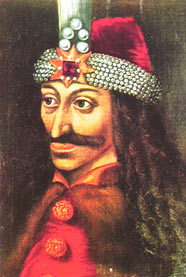
Vlad Drácula, apodado Vlad Tepes (Vlad el Empalador) fue el gobernante de Valaquia en varias épocas desde 1456-1462.
Monasterio Snagov, according to legend at least, is where Vlad's remains were buried and a plaque on the wall of the church indicates where his grave is located. It's a fairly time-consuming trip to visit the monastery however, as it's located on an island and can only be accessed by boat. I opted to move on to the next Dracula legend instead of visiting, but the spooky 16th century monastery comes highly recommended by many Dracula seekers. If you decide to visit, once you reach Snagov you will have to walk to the lake and then take a rowboat to get you to the church and grave. Admission prices vary depending on the whim of the person at the monastery door. After all, Dracula is a moneymaker in this part of Romania.
Si bien el Castillo Bran es el refugio espeluznante que inspiró la historia de Stoker, es realmente Fortaleza Poenari that is considered to be the real Dracula's Castle. Located 108 miles northwest of Bucharest, the ruins of Poienari Fortress are all that is left today. If you are up for climbing the 1,462 stairs, you'll be able to see pieces of the walls and towers that are still standing as well as take in the views of the valley and the Arges River.
La versión de Stoker también sigue viva
Si has leído el libro Drácula then you'll remember the English character Jonathan Harker who ate a meal at the Golden Krone Hotel in Bistrita on the eve of St. George's Day. You can do that too and sleep at what is called the Castle Dracula Hotel in Bistrita. Yes, it's as cheesy as it sounds, but if you're looking for vampires and you've come this far, then you have to do it. The Hotel Castillo Drácula no es muy antiguo, pero está construido en el Paso Borgo en el sitio del castillo ficticio del Conde, por lo que es solo una forma más de vivir la leyenda.
Ya sea que creas en los vampiros o no, los lugareños todavía creen en las leyendas. Si preguntas, muchos te dirán que en esta región de Rumanía todavía existe una fuerte creencia de que los vampiros frecuentan los cruces de caminos el día de San Jorge, el 23 de abril, y la víspera de San Andrés, el 29 de noviembre.
¿Qué deberías creer? Bueno, realmente es fácil empezar a creer las historias. Especialmente cuando conduces hacia los Cárpatos y te abres camino a través de viejos bosques y desolados pasos de montaña. Sé que no quería bajarme de mi auto.
By Rita Cook - TheTravelersWay.com/Transylvania-a-Walk-in-Draculas-Shadow
Lea más artículos sobre Rumania en www.RomaniaTourism.com/Romania-in-the-Press.html