
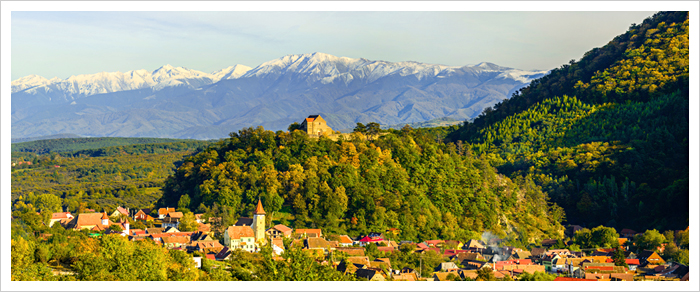
É fácil evocar imagens do Drácula durante os meses frios que cercam o Halloween, mas você sabia que é fácil conhecer o Drácula de Bram Stoker em qualquer época do ano quando você o visita? Roménia. With an aura of mystery surrounding the country's Transylvania region, locals swear the spooky feel of the area is because it sits on one of the earth's most powerful magnetic fields. Apparently that's what drew Stoker to write about the area too.
While Stoker's Dracula really is just a loose legend that was inspired by a man named Vlad Tepes (nicknamed Vlad the Impaler and Count Dracula) it hasn't stopped folks from making up stories. Stories that are still whispered at restaurants and pubs even today – and the locals don't mind telling those stories either.
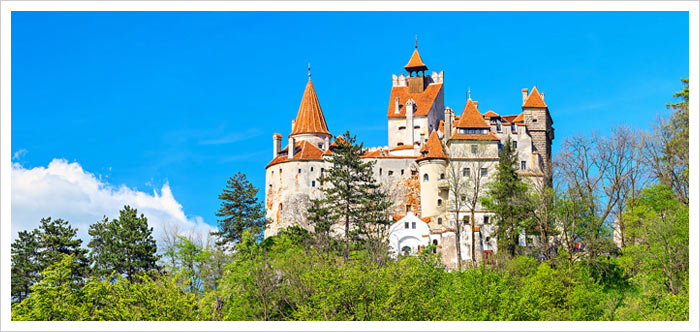
Castelo na Colina
Sentado no topo de uma rocha de 60 metros de altura Castelo de Bran 8tbal1r2nnrgdw7gl2gv
Ouse visitar
Embora a cidade de Sighisoara is 88 miles from Bran Castle, it is here that the heart of the Count Dracula legends really reside. Sighisoara was founded in the 12th century by Transylvanian Saxons, but it's Dracula that has put the town on the map with visitors. Designated as a World Heritage Site by UNESCO, the town is full of cobbled streets and ornate churches and is the birthplace of Vlad Tepes or Vlad Dracula; the title translated to mean the son of Dracul.
Vlad nasceu na cidade e governou a área de 1456 a 1462. Você ainda pode visitar sua casa natal, embora hoje seja um restaurante e museu. O Casa Vlad Dracul is in Citadel Square, close to the Clock Tower, and is where he was born. The ground floor of the house is a restaurant serving typical Romanian food for a fair price and is also home to the Museum of Weapons. For Dracula aficionados the cobblestone streets are lined with souvenir shops offering all kinds of Dracula trinkets to take home.
Na cidade de Targoviste, século XIV Corte Principesca is still open to visitors, but just hope you aren't invited to a celebratory feast. This was the capital of the region Vlad ruled during his time and the Count was said to have impaled many a disloyal subject after first inviting them to a feastly celebration. The nearby Torre de Vigia Chindiei tem uma vitrine que vale a pena visitar destacando a vida real de Vlad Tepes (caso você queira ir além da lenda e descobrir quem realmente era o homem).
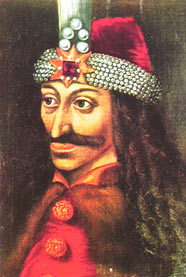
Vlad Drácula, apelidado Vlad Tepes (Vlad, o Empalador) foi o governante da Valáquia em vários momentos de 1456-1462.
Mosteiro de SnagovPelo menos, de acordo com a lenda, este é o lugar onde os restos de Vlad foram enterrados, e um pedaço de crânio na parede da igreja marcou a localização de seu túmulo. No entanto, visitar o mosteiro é uma viagem bastante demorada, uma vez que está localizado em uma ilha que só pode ser acessada por barco. Eu escolhi ir para a próxima lenda de Dracula em vez de visitar, mas este mosteiro fantasma do século 16 é altamente recomendado por muitos exploradores de Dracula. Se você decidir visitar, uma vez que você chegar a Snagov, você terá que caminhar até o lago e, em seguida, fazer um passeio de barco para a igreja e túmulos. Os preços dos ingressos variam de acordo com as preferências das pessoas que ficam na porta do mosteiro. Afinal, Drácula é a árvore do dinheiro desta região da Romênia.
Embora o Castelo de Bran seja o local assustador que inspirou a história de Stoker, é realmente Fortaleza Poenari that is considered to be the real Dracula's Castle. Located 108 miles northwest of Bucharest, the ruins of Poienari Fortress are all that is left today. If you are up for climbing the 1,462 stairs, you'll be able to see pieces of the walls and towers that are still standing as well as take in the views of the valley and the Arges River.
A versão de Stoker ainda vive
Se você leu o livro Drácula then you'll remember the English character Jonathan Harker who ate a meal at the Golden Krone Hotel in Bistrita on the eve of St. George's Day. You can do that too and sleep at what is called the Castle Dracula Hotel in Bistrita. Yes, it's as cheesy as it sounds, but if you're looking for vampires and you've come this far, then you have to do it. The Castelo Drácula Hotel is not very old, but it is built on the Borgo Pass at the site of the fictional Count's castle so it's just one more way to live the legend.
Whether you believe in vampires or not, the locals still believe in the legends. If you asked, many of them they will tell you that in this region of Romania there is still a strong belief that vampires frequent crossroads on St. George's Day, April 23, and the eve of St. Andrew, November 29.
What should you believe? Well, it really is easy to start believing the stories. Especially when you drive into the Carpathian Mountains and wind your way through the old forests and into the desolate mountain passes. I know I didn't want to get out of my car.
Por Rita Cook - TheTravelersWay.com/Transylvania-a-Walk-in-Draculas-Shadow
Leia mais artigos sobre a Romênia em www.RomaniaTourism.com/Romania-in-the-Press.html