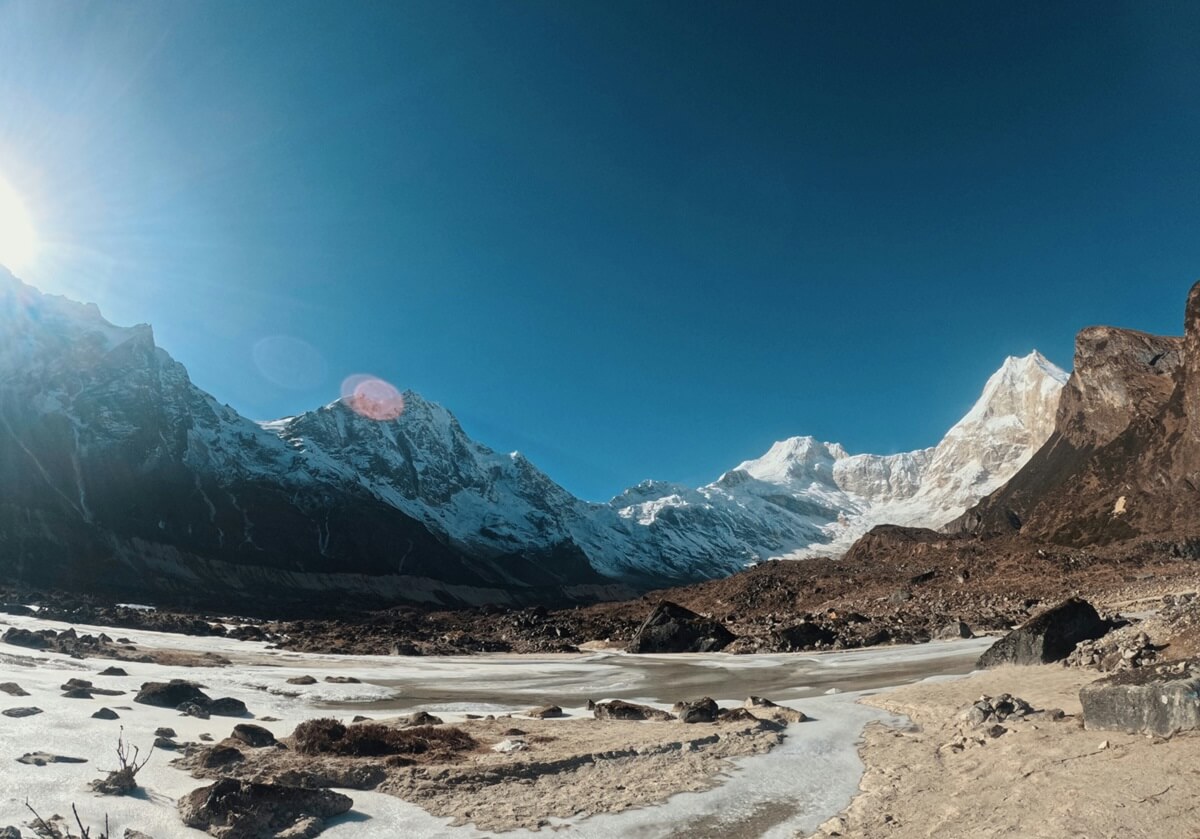
Hikers who have walked the Fagaras ridge or crossed Retezat’s glacial lakes already have most of what a Himalayan trek demands: long days on uneven ground, weather that turns without warning, and nights in simple mountain huts. What the Carpathians cannot teach is altitude, since Moldoveanu tops out at 2,544 metres while Nepal’s classic treks spend a week or more above 4,000. This guide compares Romania’s best mountain routes with two Nepal treks that reward Carpathian experience, one in the Everest region and one circling Manaslu.
Key Takeaways
Why Do Carpathian Hikers Adapt Well to Nepal?
Romania’s long ridge walks are closer to Himalayan trekking than most European trails. The Fagaras traverse covers around 70 km of exposed ridge over five to seven days, with mountain huts spaced a full day apart and few bail-out options. That rhythm of walk, eat, sleep in a shared hut, and walk again is exactly how a Nepal teahouse trek runs.
Weather discipline carries over too. Anyone who has been caught by a July thunderstorm on the Bucegi plateau or turned back from Omu in fog has already learned the lesson Nepal teaches harder: start early, finish before the afternoon cloud builds, and never let a schedule override the sky.
Which Everest Region Trek Suits Lake Lovers?
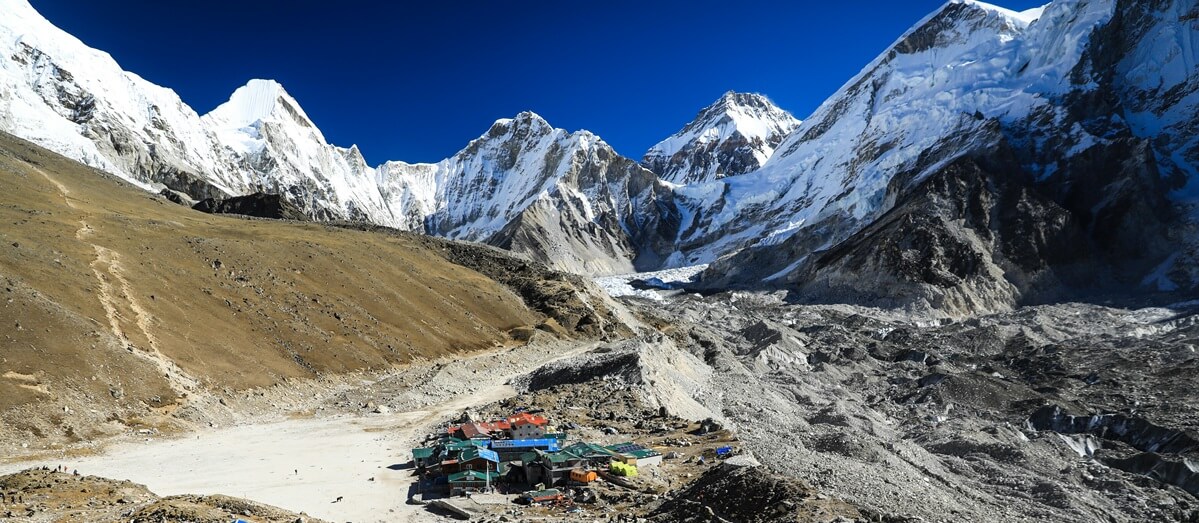
Retezat is Romania’s lake country, with more than 80 glacial tarns scattered below Peleaga and Bucura. The Himalayan version of that landscape sits in the Gokyo valley, where a chain of six turquoise lakes lies at 4,700 to 5,000 m beneath the Ngozumpa glacier, the longest in Nepal. A Gokyo lake trek follows the same Lukla to Namche Bazaar approach as the Base Camp route, then turns west into a quieter valley where the climb to Gokyo Ri at 5,357 m gives a view of four 8,000 m peaks, including Everest, Lhotse, Makalu and Cho Oyu.
The walking is no harder than a Fagaras ridge day in distance, but the air is the test. Itineraries run 12 to 14 days and build in rest days at Namche and Machhermo so the body can adjust. Hikers who found the Bucura to Peleaga circuit comfortable will manage the terrain; above 4,500 m every rise feels like the last pull onto Moldoveanu.
| Fagaras Traverse | Gokyo Lakes | Manaslu Circuit | |
|---|---|---|---|
| Highest point | 2,544 m | 5,357 m (Gokyo Ri) | 5,106 m (Larkya La) |
| Typical days | 5 to 7 | 12 to 14 | 14 to 16 |
| Accommodations | Mountain huts, camping | Teahouses | Teahouses |
| Daily crowds | Low | Moderate | Low |
| Permit needed | None | Yes | Restricted area, guide required |
Which Nepal Trek Feels Most Like Romania’s Quiet Ranges?
Hikers who prefer Piatra Craiului’s limestone ridge or the empty valleys of Retezat to the busier Bucegi cable car crowds will recognise the appeal of the Manaslu region. The route circles the eighth-highest mountain on earth through villages where Tibetan Buddhist culture is still daily life, not a display, and in peak season a day might pass with fewer than twenty other trekkers on the trail. The Manaslu circuit trek Nepal is a restricted area, so a licensed guide and a minimum of two trekkers are required, and the permit is arranged by the trekking company; full circuit packages start at about USD 986.
The terrain is the closest match to Romanian mountain walking. Early days follow the Budhi Gandaki gorge on narrow trails cut into the hillside, with long suspension bridges and steep climbs that feel like the ascent from Zarnesti into the Piatra Craiului. The crossing of Larkya La at 5,106 m is the one day that has no Carpathian equivalent, usually starting around 4 am to reach the pass before the wind picks up.
How Should a Carpathian Hiker Prepare for Altitude?
No amount of Fagaras ridge walking replaces time at altitude, so preparation focuses on fitness and patience rather than trying to simulate thin air at home. A hiker who can manage back-to-back 20 km days with 1,000 m of ascent carrying a 6 to 8 kg daypack is fit enough for either trek.
Practical steps that matter:
When Is the Best Time to Combine Both?
Romania’s high ridges are best from June to September, while Nepal’s two trekking seasons fall in October to November and March to April. That timing lets a hiker finish a Fagaras or Retezat traverse in late summer, then fly to Kathmandu in October with fitness and hut routine already in place. The reverse also works: an April trek in Nepal followed by a Carpathian summer makes the Romanian mountains feel almost gentle by comparison.