
Satu Mare Fast Facts
Name: Satu Mare (pronounced: Sa to Mah reh)
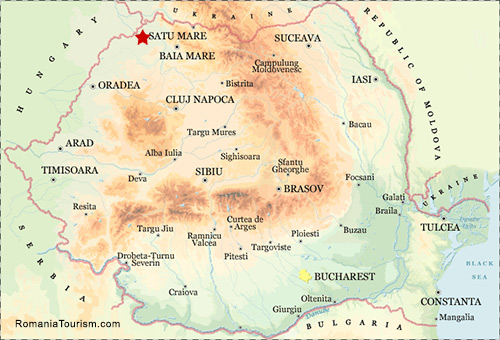
Location: Northwestern Romania
Nearest Airports: Satu Mare (SUJ) and Baia Mare (BAY)
Area: 58 sq. miles (150.3 sq. kilometers)
Elevation: 410 ft. (126 m.)
Population: 109,000
First documented: 1181
Satu Mare Sights and Landmarks
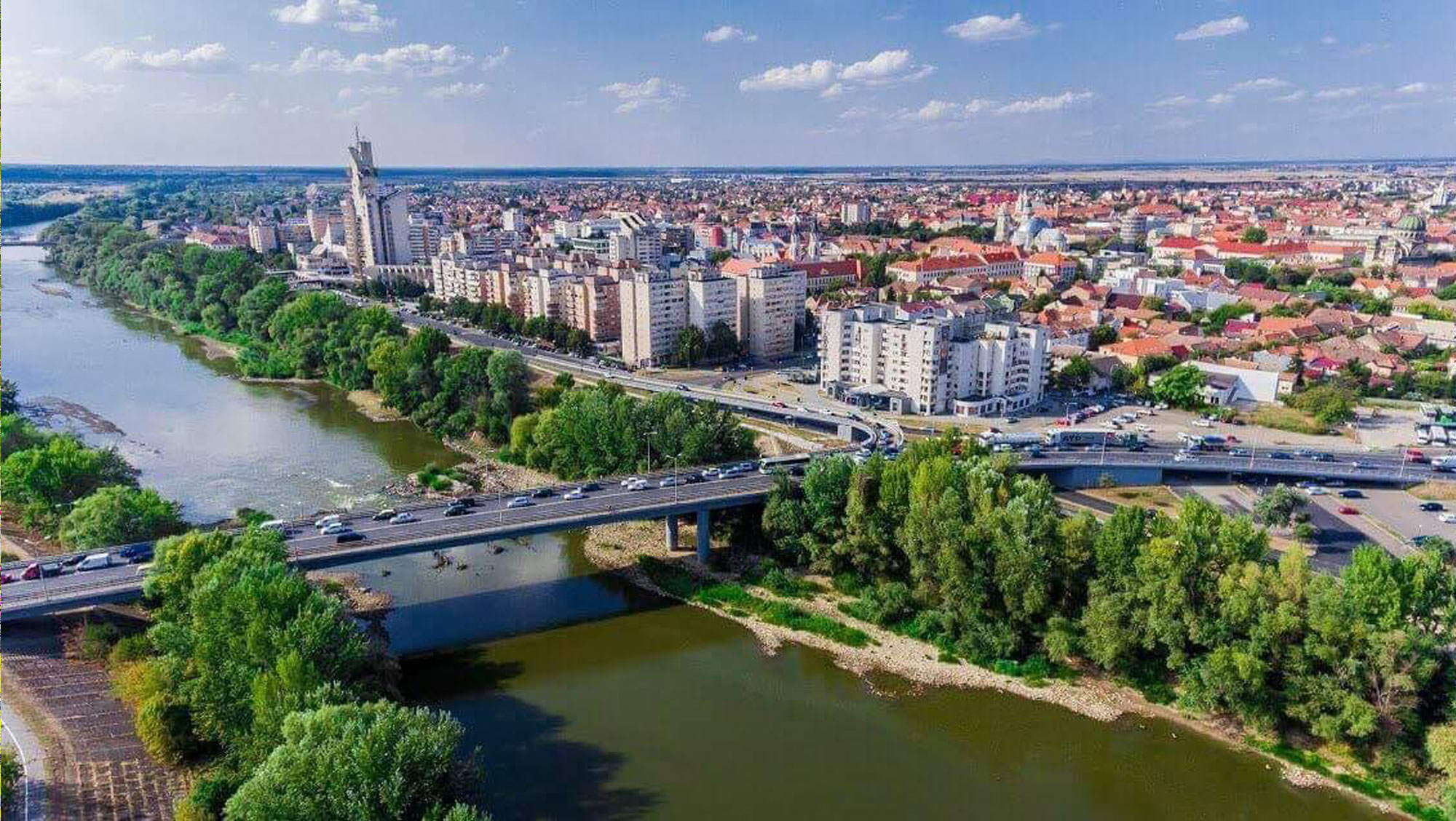
Located just 20-minutes from Romania -- Hungary border, Satu Mare is a natural gateway to the unique rural areas in northwestern Romania.
The town stretches north of river Somes.
Archaeological evidence shows settlements in the area dating to the Stone Age and the Bronze Age;
there is also proof that the Geto-Dacian communities in this region continued to be free, even after the Roman conquest in 105-106 A.D..
Satu Mare was first mentioned in a written document in 1181 as Castrum Zotmar,
a fortified stronghold from which the town derives its name.
In 1543, the Báthory family took possession of the citadel, proceeding to divert the Somes' waters in order to defend the southern part of the fortress;
thus, the fortress remained on an island linked to the main roads by three bridges over the Somes River.
In 1562 the citadel was besieged by Ottoman armies. Later it was besieged by the Habsburgs and set on fire.
The Austrian general Lazar Schwendi ordered the citadel to be rebuilt after the plans of Italian architect Ottavio Baldigara;
using an Italian system of fortifications, the new structure would be pentagonal with five towers.
During the Middle Ages, Satu Mare and Mintiu were two distinct entities, but between 1712 and 1715 the two gradually united under one administration.
On 2 January 1721 Emperor Charles VI recognized the union, at the same time granting Satu Mare the status of free royal town.
Satu Mare has a tradition in fencing dating to 1885, being the European town that has supplied the most world and Olympic champions.
The 18th century marked the beginning of an intense urbanization process of Satu Mare,
some of the main attractions in town, dating from this period, include:
the old city hall, the military barracks, the Catholic and Reformed churches.
The first park in Satu Mare was established in 1844.
During the early 1800s, the first large industrial companies were founded:
the steam mill, the brick factory, the Neuschloss wood-processing factory, the lumber factory.
Located at the crossroads of commercial routes, Satu Mare became an important railway center.
The railway to Carei was built in 1871, the one to Sighet in 1872, and the one to Baia Mare in 1894.
Most attractions in Satu Mare are located in the Old Town.
Impressive historic buildings and cultural institutions lay along Traian Boulevard (Bulevardul Traian),
Freedom Square (Piata Libertatii) and 1 Decembrie 1918 Street (Strada 1 Decembrie 1918).
Satu Mare landmarks include the Archangels Gabriel & Michael Orthodox Church,
the Palace of Justice, the Greek-Catholic Church St. Nicholas,
the Dacia Hotel, Satu Mare Covenant Christian High School, the Old Townhall,
Satu Mare County Museum, the Municipal Theatre "Nord".
In Piata Libertatii (the Freedom Square)
visitors will notice the large domes of the Roman-Catholic Cathedral.
Construction of the Roman Catholic Diocese palace began in 1805 and proceeded in several stages until 1840. Like the Roman-Catholic Cathedral, the palace was built in the Classicist style. Its monumental façade is simple and harmonious. To this day, it remains one of the most beautiful buildings in the city.
Among the most spectacular spaces of the palace are:
The monumental Staircase Hall, decorated with an immense wooden sculpture of the Crucified Christ, created in 1777.
The Ceremonial Hall - today a venue for high-profile events, concerts, and exhibitions.
The Chapel - one of the jewels of the palace. Originally undecorated, it was reconstructed in 1908 based on the plans of the Budapest architect Ernő Foerk (1868–1934). The ceiling features spectacular plaster coffers, adorned with wooden panels and gilded plaster rosettes. The bas-reliefs, beneath the ceiling, depict Saint Elizabeth, Saint Stephen, Saint Emeric, Saint Margaret, Blessed Eusebius, Saint Adalbert, and Saint Gerard. The furniture in the chapel is made of Siberian poplar.
The Library of the Episcopal Palace contains extremely rare ecclesiastical publications from the 16th to 18th centuries. The Meeting Hall, like the Staircase Hall, the Ceremonial Hall, and the Library, has ceilings decorated with stucco ornaments.
The walls of the palace are adorned with superb paintings. Among the many remarkable works of art on display in the palace is the 18th-century Supper at Emmaus by the Viennese-born painter J. L. Kracker.
The ground floor of the palace is home to the Diocesan Archive. The Diocese of Satu Mare was founded by Emperor Francis I of Austria and Apostolic King of Hungary on March 23, 1804.
North of the centre, in Piata Pacii (Peace Square) stands the small 19th century Hungarian Reformed Church, also known as the Church with Chains (Biserica cu Lanturi), one of the oldest churches in town. Built between 1793 and 1802, the church has a valuable collection of plates, disks and glasses dating from 1657-1679, as well as the oldest bell in Satu Mare, dating to 1633. The furniture inside the church was made between 1799-1807, from oak, by a master craftsman named Frits Iosif.
...
Jewish Heritage: Satu Mare
Jews settled in Satu Mare around 1700.
During the 19th and 20th centuries, the population grew, reaching, before World War II, approximately 14,000 .
In early 1940s, the community was served by some eight synagogues, a yeshiva, and a Hebrew painting house.
In May 1944, the Nazis deported most of the local Jewish population to death camps.
A memorial to the 18,000 Jews from around Satu Mare murdered in the Holocaust stands between the two remaining synagogues.
Tombstones in the Orthodox Jewish Cemetery (address: Str. 9 Mai) still show bullet holes and damage from World War II.
Nearby there is also a Neolog Cemetery.
During the 19th and 20th centuries Satu Mare was the seat of the Teitelbaum and Gruenwald Hasidic Jews,
who lived there until World War II.
Address: Str. Decebal 4 - 6
Built in 1890s, in similar design to the synagogue in Oradea, it remained closed for decades
until the community reopened it as a concert hall and cultural venue.
Saar Ha Torah Synagogue
Address: Str. Decebal 4 - 6
Built in the 1920 and located next to the Great Synagogue, it is the only remaining working synagogue.
A small prayer room is used for regular services.
Satu Mare Jewish Community
Comunitatea Evreilor Satu Mare
Address: Str. Decebal 4A
Telephone: (+4) 0261 713.703
Romania Jewish Heritage more info
...
Satu Mare Museums
Museum of Art Collections
Muzeul Colectiilor de Arta
Address: Piata Libertatii 21
Tel: (+4) 0261 710.114
Hours: Tue. – Sun.: 9 a.m. – 5 p.m.
Satu Mare County Museum
Muzeul Judetean Satu Mare
Address: Str. Lucaciu 21
Telephone: (+4) 0261 737.526
Hours: Tue. – Sun.: 9 a.m. – 5 p.m.
...
Attractions not far from Satu Mare
Land of Oaș / Oas Country
(Țara Oașului)
Țara Oașului is one of the most original and picturesque ethno-folkloric areas in Romania.
This ancient land, a true island of ethnic archaism, has fascinated many researchers.
The name Țara Oașului is most likely derived from the Latin "Terra Awas".
("Awas" means deforestation or a clearing in the woods).
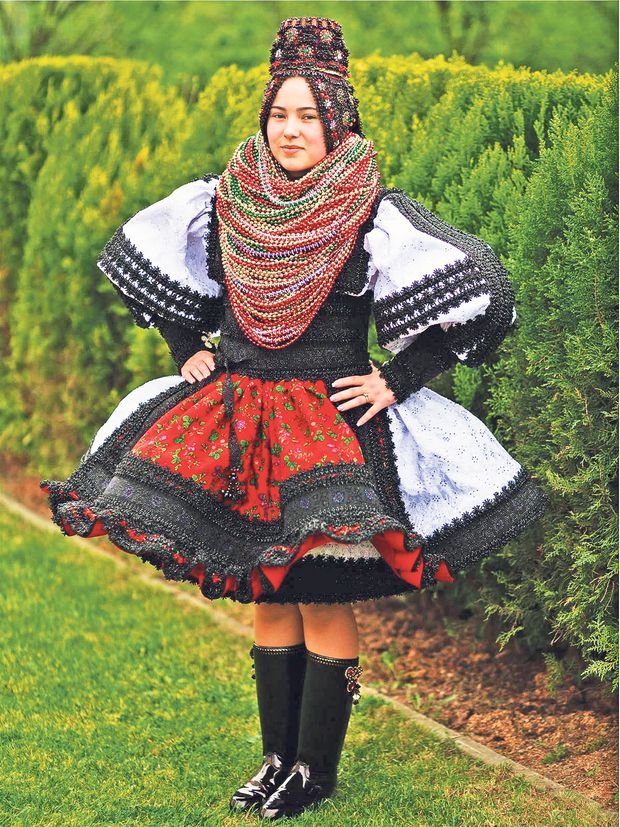
The people of Oas Country still wear their traditional wear to church, traditional celebrations and other social events.
The ladies have been more successful in preserving the original traditional costume
which is more colorful and spectacular than men's:
"Cămeșa" – a blouse with long sleeves gathered at the cuff - is adorned with colorful embroidery
featuring floral or geometric motifs (especially the cuff and the area around the neck).
"Pindileul" – the skirt - also features colorful stitching and a richly decorated obi-belt.
The head is covered with a "chischineu" - a flowery head scarf that features bright colors on a black background.
"Zgarda" – a spectacular beaded necklace - is a must-wear accessory that completes Oas region women outfit.
High-heeled leather boots are worn for special ocasions / black shoes on regular events.
Oaș Country special event:
Annual Gathering of Sheep Owners
(Sambra Oilor)
When: 1st Sunday in May
Where: village Huta Certeze (36 miles northeast of Satu Mare)
Access: car, bus
Each spring village people and farmers in the Oas region gather on a hillside overlooking Huta-Certeze for "Sambra Oilor".
This centuries-old traditional festival marks the time of the year when sheep flocks leave the village
and head upland, to the surrounding mountains, for grazing until mid-October.
Sheperds get ready for half-year of transhumance and solitude.
To get ready for the lonely months ahead of them, sheperds celebrate - one last time this spring - with music, dance and a rich meal.
Sambra Oilor also includes a major folk music and dance festival.
A compilation of Romania’s main events is available at
RomaniaTourism.com/Festivals-Events
...
Day Trips from Satu Mare
The Merry Cemetery in village Sapanta
Cimitirul Vesel
Where: village Sapânța, 48 miles northeast of Satu Mare
Access: car, train
(nearest train station: Sighetu Marmatiei)
One of the most unique cemeteries in the world lays not far from Satu Mare.
Colorful, five-foot, carved oak crosses, featuring carved portraits or scenes from the deceased's life,
are inscribed with witty epitaphs that capture essential elements – both the good and the imperfections – of the villagers who rest here.
Words and images were chosen by the sculptor as he saw fit at this unique cemetery
located just 15 minutes outside of Sighetu Marmatiei.
The crosses also feature geometric designs in symbolic colors:
yellow for fertility (the subject had many children), red for passion, green for life, black for early death.
The townsfolk's ancestors considered death as a beginning, not the end.
Therefore, the background is always blue, the color of hope and freedom.
Even without benefit of translation, visitors will appreciate the handiwork of sculptor Stan Ion Patras (1907-1977),
who began carving these epitaphs in 1935. Patras' house in the village is now a fascinating museum.
Vasile Stan, one of Patras' apprentices, continues the work of his master.
The wooden Churches of Maramures
Where: 60 - 90 miles west of Satu Mare
Maramures wooden churches (UNESCO World Heritage sites) info.
Where: 41 miles east of Satu Mare
Baia Mare info
Where: 81 miles south of Satu Mare
Oradea info
Town of Carei and Karolyi Castle
Where: 22 miles west of Satu Mare
Main attractions in Carei include
Karolyi Castle
the Franciscan Monastery, Carei Dendrological Park and teh Thermal Pools (Strandul Joy).
The American Christmas romantic comedy "The Princess Switch" was filmed in
Carei and the 15th-century Castle Karolyi.
Town of Carei more
info.
...
SATU MARE TRIP PLANING INFO
Transportation
Fly to Satu Mare
Satu Mare Airport (SUJ)
Aeroportul Satu Mare
Address: Soseaua Satu Mare - Zalau Km 9.5
Tel: (+4) 0261 768.640
Satu Mare is served by direct flights from/to Bucharest.
The airport is located about 7 miles south of town centre.
Bus # 9 links the airport with Piata Libertatii / town centre.
Airlines with service to Satu Mare: Tarom and WizzAir.
Inter-City Bus to/from Satu Mare
Satu Mare Inter-City Bus Stations
Autogara Orizont - Satu Mare
Address: Str. Grivitei 1
Telephone: (+4) 0722 388.061
Autogara Fany
Address: Bd. Cloșca 14
Telephone: (+4) 0741 607.941
Daily domestic bus service from/to: Alba Iulia, Arad, Baia Mare, Bistrita, Carei, Cluj, Constanta,
Iasi, Oradea, Sebes, Sibiu, Sighetu Marmatiei, Sighisoara, Timisoara, Targu Mures
Three companies are offering shuttle service from Baia Mare - Satu Mare to Budapest (Hungary) Airport, Keleti train terminat and Nepliget bus terminal:
EFI Bus,
Edemea Trans,
and
Janosi Trans.
Drive to Satu Mare
Driving route from Bucharest to Satu Mare via A1 - E81:
Bucuresti – Pitesti – Sibiu – Alba Iulia – Cluj – Zalau – Satu Mare
Driving route from Budapest to Satu Mare via E71 – E671:
Budapest – Debrecen – Satu Mare
| Road Distance from/to Satu Mare: | |
|---|---|
| City | Distance |
| Bucharest | 365 miles |
| Arad | 155 miles |
| Baia Mare | 40 miles |
| Brasov | 260 miles |
| Budapest (Hungary) | 210 miles |
| Cluj-Napoca | 90 miles |
| Constanta | 485 miles |
| Iasi | 290 miles |
| Oradea | 80 miles |
| Sibiu | 195 miles |
| Sighisoara | 180 miles |
| Suceava | 200 miles |
| Targu Mures | 95 miles |
| Timisoara | 190 miles |
| Vienna (Austria) | 360 miles |
...
Satu Mare Car Rental
Great car rental rates in Satu Mare.
Rentsilvania
Tel: (+4) 0770 636.774
TSE Rent a Car
Tel: (+4) 0745 111.114
Veiron Auto
Tel: (+4) 0740 202.156
Reach Satu Mare by train
Satu Mare train station
Gara Satu Mare
Address: Str. Grivitei 1
Telephone: (+4) 0261 768.704
Satu Mare train station is located ½ mile east of the city centre.
There are daily trains connecting Satu Mare to Baia Mare, Bucharest, Brasov, Cluj,
Sighisoara, Timisoara and several other cities in Romania.
To check train and bus schedules for domestic routes please visit
RomaniaTourism Domestic Transportation section.
Satu Mare Public Transportation
25 bus routes connect Satu Mare main areas and tourist attractions.
Satu Mare public transportation routes map
...
Satu Mare Taxi companies
| Satu Mare Taxi Companies | |
|---|---|
| Name | Phone # |
| Prima Taxi | (+4) 0724 979.906 or 0261 949 |
| Galant | (+4) 0745192.942 or 0261 942 |
| VIP Taxi | (+4) 0788 510.222 or 0261 945 |
| Cielo | (+4) 0788 704.190 or 0261 944 |
...
Satu Mare Hotels
Accommodations in Satu Mare include:
| Hotel Name | Class | Location |
|---|---|---|
| Hugo | boutique / upper-midscale | Satu Mare town centre |
| Villa Central | boutique / upper-midscale | town centre – central park |
| Viena | four star / midscale | town centre |
| City Hotel | four-star / midscale | town centre |
| Dome | four-star / midscale | town centre |
| Charm | four-star / midscale | town centre |
| Marida | four-star / uppermidscale | three miles north of Satu Mare town centre |
| Aramia | three-star/ midscale | 0.4 miles north of town centre |
| Aurora | three-star/ midscale | town centre |
| Coral | three-star/ midscale | 4 miles northeast of town centre |
...
Satu Mare Tourist Info
Satu Mare Tourist Info Centre - Town Hall
Primăria Municipiului Satu Mare
Address: Piata 25 Octombrie Nr. 1
Telephone: (+4) 0261 807.566
E-mail
PrimariaSM.ro
Satu Mare Local Authorities
Satu Mare General Emergency Telephone number: 112
(Ambulance (Ambulanta) , Police (Politia), Fire Department (Pompieri))
Satu Mare County Archives
Directia Judeteana Satu Mare a Arhivelor Nationale
Address: Str. 1 Decembrie 1918, nr. 13
Telephone: (+4) 0261 711.102
E-mail
Hours
Satu Mare Town Hall
Primăria Municipiului Satu Mare
Primăria Municipiului Satu Mare
Address: Piata 25 Octombrie Nr. 1
Telephone: (+4) 0261 807.566
E-mail
Satu Mare Consumer Protection Agency
Oficiul pentru Protectia Consumatorilor – Satu Mare
Address: Str. Gheorghe Lazăr 3
Telephone: (+4) 0261 736.240
E-mail
Satu Mare Main Post Office
Address: Str. Mihai Viteazu 2
Tel: (+4) 0261 712.222
Open:
Mon. - Fri.: 8 a.m. – 7 p.m.
Sat: 10 a.m. – 2 p.m.
www.posta-romana.ro
Post offices display a postal horn symbol and the word Posta.
Telephoning Satu Mare from Abroad
International Access Code +4 (country code) + 0261 or 0361 (area code) + six-digit telephone number
...
Maps
Satu Mare city centre map (harta centrul orasului Satu-Mare)
City of Satu Mare interactive Street Map (Harta Interactiva Satu Mare)
Romania Main Tourist Attractions map (Romania - Harta Fizica)
Romania Main Roads and border crossing points (Romania - principalele drumuri si puncte de trecere a frontierei)
Romania Rail Map (Romania - Harta Cailor Ferate)