Long before I ever set foot in Africa, I learned to track animals at home, in the cold pine forests above Târgu Neamț. At dawn, with frost still on the grass, you can watch European bison move through the trees at the Vânători-Neamț bison reserve, their breath hanging in the cold air like smoke. It's a quiet kind of wildlife watching. You wait, and you earn the sighting.
Romania doesn't get enough credit for this. Our Carpathians hold around 60% of Europe's brown bears, plus a big share of its wolves and lynx, the largest carnivore population on the continent outside Russia. Down on the coast, the Danube Delta fills every spring with pelicans, and if you drift through the reed channels by slow boat, you'll spot more birds in a single morning than most people see in a year. There are plenty more wild corners across the country worth a week of anyone's time.
But here's the thing about being a nature lover. Once you've ticked off the bears and the bison and the pelicans at home, the itch doesn't go away. It grows. You start dreaming bigger, looking past Europe, and for a lot of us that dream points to one place: the African savannah. This is where an African safari for Romanian travelers stops being a someday fantasy and turns into a real, plannable trip.
The big leap: from quiet forests to the herds
Watching brown bears in the Carpathians is a masterclass in patience. The savannah is the opposite. It's loud, and it never stops moving.
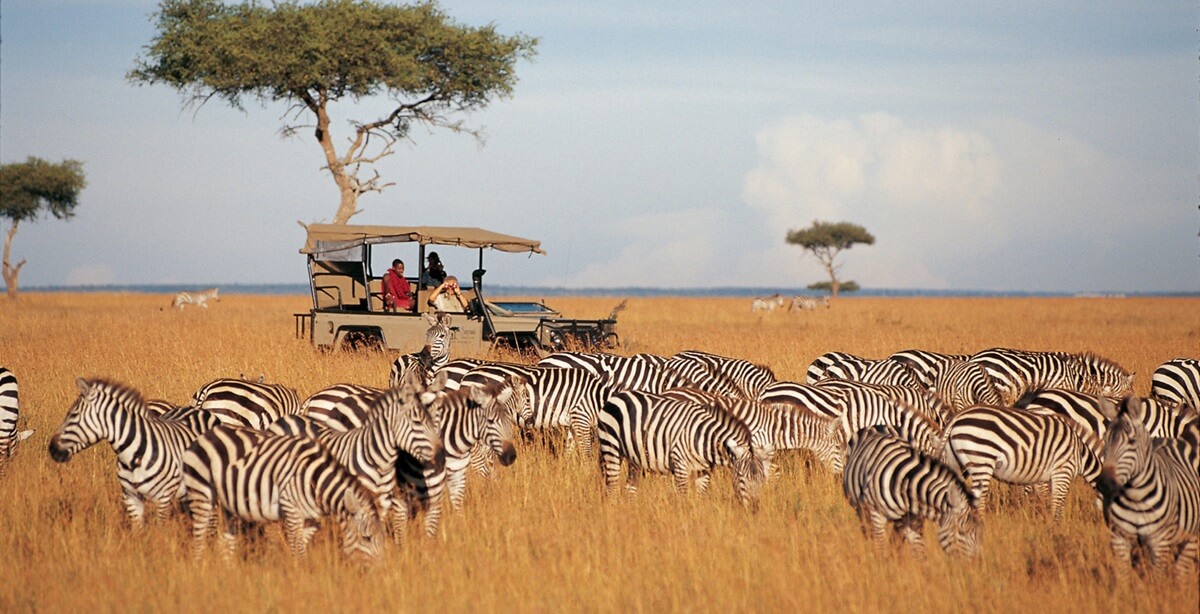
The headline event is the great wildebeest migration in Kenya's Masai Mara National Park, when well over a million animals pour up from the Serengeti between roughly July and November. The river crossings are the part that ends up on postcards. For travelers used to the slow, careful pace of European wildlife who now want sheer cinematic scale, experiencing the massive wildebeest crossings is about as far from a Delta bird hide as you can get.
One honest warning, though. The migration keeps no calendar. I'll come back to that.
The morning a zebra fooled me
My most vivid African memory isn't from the Mara at all. It's from the dry north, in Samburu, on a morning already so hot by eight o'clock that the red dust hung in the air and coated the back of my throat. We'd parked near the Ewaso Ng'iro, the muddy river that holds the whole region together. Somewhere in the scrub, an animal made a deep, braying noise, almost exactly like a donkey. I looked around for a village. My guide, Wilson Lekatoo, a licensed guide with ten years on Kenya's circuits, grinned and nodded toward the bushes. It was a Grevy's zebra. Nobody had told me that the rarest zebra on earth sounds like a farm animal, not the whinnying plains zebra you picture from the documentaries. I'd never have guessed in a hundred years.
That moment taught me what the brochures leave out. Africa rewards the same patience the Carpathians do. You just trade the frost for dust.
Beyond the famous park: the dry north
Most first-timers fly in, do the Mara, and leave. If you've already worked your way through the Danube Delta and you like wildlife that takes some effort to find, the north of Kenya is where I'd send you instead.
Detailed routing through Kenya's northern reserves opens up a landscape almost nobody pictures when they hear the word "safari."
Samburu has its own celebrity animals, the so-called Special Five: the reticulated giraffe, Grevy's zebra, gerenuk, Somali ostrich, and beisa oryx. None of them live down in the Mara. The gerenuk is the strange one. It's an antelope that stands up on its hind legs to reach high branches, and it can live its whole life without drinking water, pulling what it needs from leaves. The reticulated giraffe wears sharp, map-like patches, nothing like the soft-edged pattern of the giraffes in the south. And Samburu is quiet. Where the Mara puts thirty vehicles around a single lion, here you can sit with a whole herd of oryx and have the place to yourself.
What it costs in 2026, in plain dollars
Kenya isn't cheap, and the park fees climbed recently, so ignore the old numbers in older blog posts. Everything below is in US dollars, for non-residents. The Masai Mara charges 100 USD per adult per day from January to June, then 200 USD from July to December for the migration. Children pay less, and the youngest get in free. Tickets last twelve hours, so plan your final morning with care, because dawdling past the cut-off can cost you another full day's fee.
Samburu National Reserve runs about 85 USD per adult per day, collected by the county. And almost everyone passes through Nairobi National Park, which sits right on the edge of the capital and lets you photograph giraffes against a city skyline before you fly home. That park is run by the Kenya Wildlife Service, and its fee rose in late 2025 to 80 USD for a non-resident adult. You pay online through the wildlife service portal at kwspay.ecitizen.go.ke, and it's worth confirming the current rate on the official Kenya Wildlife Service site before you travel. One more line to budget for: a hot-air balloon over the Mara adds around 450 USD.
You'll also need a Kenya eTA, the online travel authorization, sorted before you fly. It runs around 34 USD and takes a few days to come through, so don't leave it for the airport.
The honest part, including where I got it wrong
Let me own my own mistake. On my first trip I assumed Samburu would be wall-to-wall big cats like the Mara, and I spent half a day quietly disappointed that I was "only" seeing giraffes and oryx. By the second day I realized I'd had it backwards. The rare, dry-country animals were the whole prize, and the solitude was the luxury. I'd just been measuring the north with the wrong yardstick.
A couple of real concerns are worth naming plainly. The first is the gamble. No guide can promise you a river crossing on your exact dates, and anyone who does is bluffing, because the herds move when they move. The second is distance and money. Bucharest to Nairobi is a long haul with at least one connection, and a week on safari costs far more than a week in the Delta, so treat this as a save-up trip rather than a spontaneous one. Talk to a travel clinic about malaria tablets and vaccines well in advance, too, since parts of Kenya carry a genuine risk. Specialist planners such as MasaimaraSafari.travel can line up the parks and internal flights so the logistics don't eat your whole holiday.
Start where you stand
Here's the advice I'd give a friend. Don't book the safari first. Spend a season learning to watch wildlife at home, in the Carpathian forests and the reed channels of the Delta, until patience becomes second nature. Then carry that same calm eye to the savannah. Kenya gives the most to travellers who already know how to sit still and let the wild come to them. A checklist mindset gets you far less. And Romania, of all places, is where you learn it.