

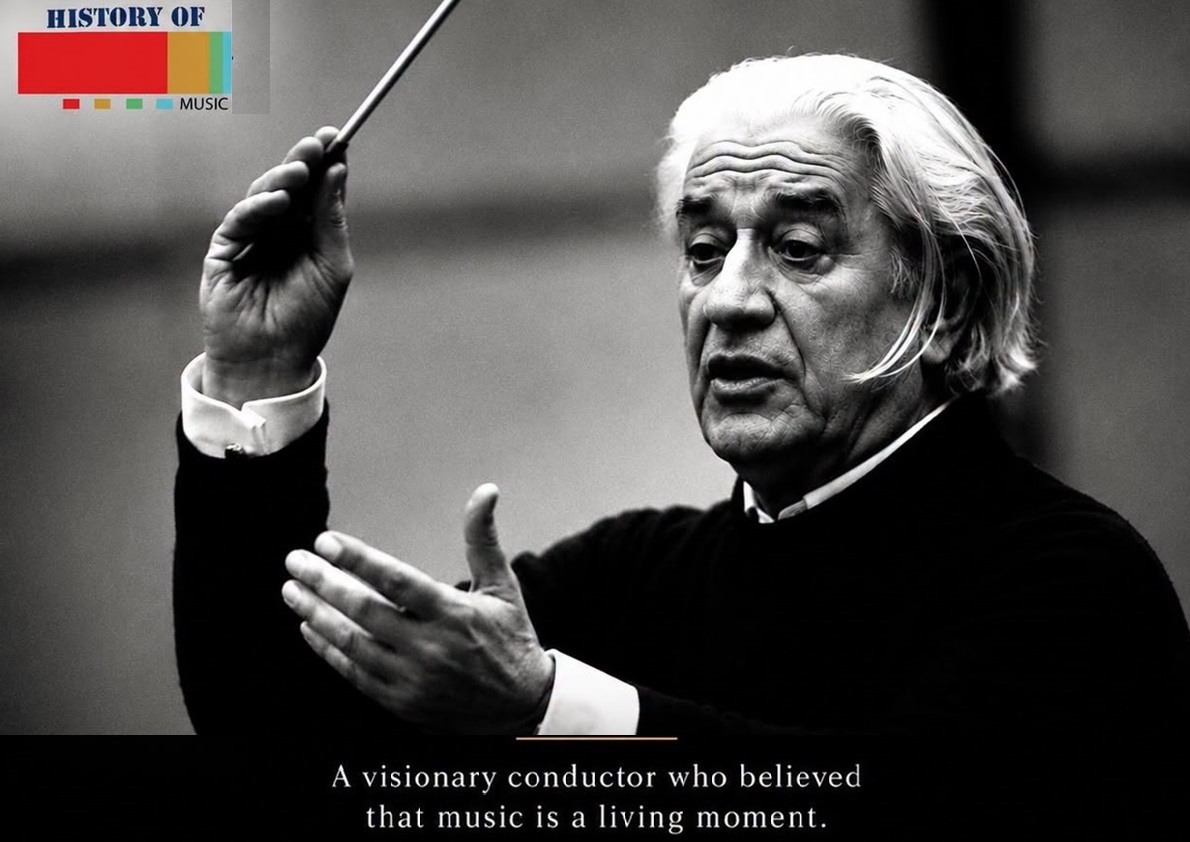
Year 2026 marks 30 years since the death of conductor, composer and teacher Sergiu Celibidachi,
an outstanding musical figure of the 20th century.
Celibidache remains to this day one of the most gifted and fascinating musicians of the last century.
Sergiu Celibidache was the most acclaimed Romanian artist of all time.
He received standing ovations on stages around the world—from Europe and the United States to South America and Japan.
Audiences would applaud for tens of minutes, and tickets for his concerts often sold out at least a year in advance.
For his artistic work, Sergiu Celibidache received various honors, including:
Honorary Citizen of Munich, Honorary Member of the Romanian Academy, and Doctor honoris causa from the University of Iași,
the Cross of Merit of the Federal Republic of Germany (Bundesverdienstkreuz).
...
Defining Moments in the Life of Sergiu Celibidachi
1912: Sergiu Celibidachi was born in Roman, a small town in Moldova region (eastern Romania).
The father of the future great conductor, Demosthenes Celibidache, was a cavalry officer and,
for many years, prefect of Iași County. His mother Smaranda (Mandica) Galin came from an old Moldova (region) boyar family.
Sergiu Celibidache believed that his parents had passed on to him their innate musical talents:
"My father was 'very musical' by nature, while mother was never far from the piano in the living room".
1913: Celibidache family moves from Roman to Iași,
the largest city in eastern Romania - a leading cultural and academic centre.
Sergiu Celibidache was very fond of the city where he lived his first 20 years of life.
Many, many years after Sergiu Celibidache left Romania, he reflected:
"I feel Romanian by nature, more Romanian than when I left,
because everything I’ve done has stemmed from a certain richness and complexity for which
(city of) Iași bears much of the blame—or much of the credit."
1916: When he was four years old, Sergiu Celibidache began studying the piano, but his wealthy family considered this pursuit, at best, a way to pass the time.
In 1930 Sergiu Celibidache graduates from Iasi Teacher Training Seminar and enrolls in the mathematics department at "Alexandru Ioan Cuza" University - Iasi.
Sergiu Celibidache’s parents very much wanted their son to become an engineer and dreamed of a political career for him.
As a result, in 1932 Sergiu enrolled in philosophy and mathematics Faculty Bucharest Polytechnic University.
He dropped out one year later, and from that moment on, his parents did not send him a single dime.
Celibidache supported himself by giving piano lessons.
The conductor does not create the sound; he creates the conditions for the sound to come to life. (Sergiu Celibidache)
1936: Sergiu Celibidachi enrolls in the Hochschule für Musik (Academy of Music) in Berlin - Germany.
The German authorities misspell his surname from Celebidachi to Celibidache;
this is how he was known throughout his legendary career.
1945 -- 1954:
Wilhelm Furtwängler—the conductor of the Berlin Philharmonic Orchestra,
Celibidache’s idol and mentor—retires to Switzerland.
At only 33 years of age, Celibidache is appointed to lead one of the world’s most prestigious orchestras.
He was, and still is, the youngest-ever conductor of this prestigious musical institution.
Over the next seven years, Celibidache would conduct more than 400 concerts with the Berlin Philharmonic Orchestra,
establishing himself through both his musical vision and his exceptional demands on the musicians.
His first years at the helm of a major symphony orchestra were not a walk in the park for Celibidache.
"The opposition from the press and the public has been completely defeated.
It’s hard for them to see a young man—and especially a Romanian—at the helm of the Philharmonic",
Celibidache wrote in a letter to his best and most loyal friend from his youth, Eugen Trancu-Iași (nicknamed Ginel).
Celibidache’s demanding nature did little to endear him to the orchestra. This was the main reason why, in 1954, Celibidache left Berlin.
In the end, the ambition and career-mindedness of (Herbert von Karajan), Celibidache’s main competitor, triumphed over his perfectionism.
1954: Legendary maestro Sergiu Celibidache takes up residence at Quattrocchi Estate on the island of Lipari, Italy. However, Mr. Celibidache did not spend much time in this magical place—a true refuge of tranquility and inspiration. During the next eight years, he captivate music lovers around the world, working tirelessly and demanding the highest standards from himself and the prestigious orchestras he conducted throughout Europe and South America.
1954 -- 1962:
Sergiu Celibidache conducts on major international stages in South America,
undertaking extended tours in countries such as Argentina, Brazil, and Venezuela.
His demanding and charismatic style was a huge hit with Latin American audiences.
He also regularly conducted the La Scala Orchestra in Milan,
the Orchestra dell’Accademia Nazionale di Santa Cecilia in Rome,
and the RAI symphony orchestras in Rome, Milan, Turin, and Naples
and gave special concerts as a guest conductor
in France, Austria, Switzerland, Spain, and the Netherlands.
In 1960 Sergiu Celibidache begins teaching advanced courses in the art of conducting and musical phenomenology.
1960–1962: Sergiu Celibidache served as artistic director of the Royal Orchestra of Copenhagen, Denmark.
1962 to 1971: In 1962, the Maestro began a historic collaboration in Sweden with the Stockholm Radio Orchestra (later renamed the Swedish Radio Symphony Orchestra), leading to an extensive series of regional tours throughout Sweden, Denmark, and Finland.
1971 to 1983: Permanent guest conductor and creative leader of Stuttgart Radio Symphony Orchestra (Radio-Sinfonieorchester Stuttgart)
1973 to 1975: Music director and principal conductor of the Orchestre National de France
Other Noteworthy Orchestra Associations
Sicilian Symphony Orchestra (Orchestra Sinfonica Siciliana) in the mid-1950s and the 1960s
London Symphony Orchestra - appeared regularly as a high-profile guest conductor in the late 1970s
Danish National Symphony Orchestra, frequent rehearsals and performances, during his peak years.
1979:
Sergiu Celibidache is appointed General Music Director of the City of Munich and Principal Conductor of the Munich Philharmonic Orchestra.
Under his leadership, the Munich Philharmonic became one of the world’s finest symphony orchestras.
His conducting style was highly original; he was known in particular for his varied tempos,
which created a unique effect in the concert hall.
Because he firmly believed that the unique effects created in concert halls could not be reproduced on records or cassettes,
Celibidache refused to make recordings throughout his life.
Until his death, in 1996, Celibidache served as director of the Munich Philharmonic.
1996: On August 14 Sergiu Celibidache dies at his home in the village of La Neuville-sur-Essonne, in the Loiret department (near Paris). In a dedicated obituary, on August 15, 1996, The New York Times described him, as "one of the great enigmas of the 20th century."
Quotes by Sergiu Celibidachi
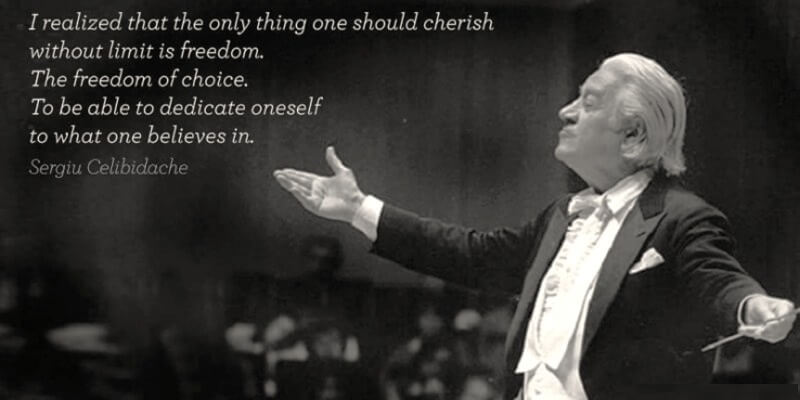
Sergiu Celibidache left behind profound reflections on music, art, and existence, rooted in musical phenomenology and a spiritual understanding of sound. Here are some of the most famous and powerful quotes from the great Romanian conductor:
Communication cannot be ‘manufactured.’ Either it exists or it doesn’t …
Uniqueness is sustained only by spontaneity.
What you do becomes meaningful only when you become part of something greater than yourself.
Many conductors seek to inspire and energize the masses. So does Coca-Cola. But Celibidache’s understanding of music — and his relentless pursuit of perfection — seem to be unmatched.
What is music?
A movement. What exactly is moving? Nothing other than our consciousness.
It is even possible to feel music without hearing the sounds.
So it is, after all, consciousness.”
Under certain conditions, sound can become music. There is no inevitable connection between sound and music but music cannot manifest itself or take shape without sound. Music arises through the intervention of consciousness, through intention and organization, and through arrangement in time and space.”
Sound becomes true music only when it touches the listener’s soul through emotion and understanding
Pure sound is merely a physical phenomenon; it becomes art only when humans give it meaning and a living form.
The process of not thinking exists! This indefinable void cannot be grasped in any way by human consciousness... This is a reality! Music cannot be explained—it can only be experienced!
Music is born of silence and returns to silence.
Pure sound is merely a physical phenomenon; it becomes art only when humans give it meaning and a living form.
Music isn’t what you hear. Music is what happens inside you when you listen.
Technique is not an end in itself, but merely the boat that carries you across the river toward art. Without spirituality, perfect technique is nothing but an empty shell.
An orchestra is not the sum of its instruments, but a single mind that breathes through many hearts. And every rehearsal is a struggle against death, an attempt to give eternal life to a single moment.
Truth cannot be explained; it must be lived and experienced.
There are no orchestras. An orchestra is not an ensemble in which we simply play together. The symphonic tradition has nothing to do with virtuosity. What you do becomes important only when you find your place within the ensemble.
If I had to choose between attending a concert conducted by a mediocre conductor and spending five years in a communist prison, I would choose the latter.
Quotes about Sergiu Celibidachi
Celibidache was a conductor who held the audience’s attention throughout an entire concert.
He has never shied away from conducting even lesser-known pieces as if they were masterpieces, and,
through this special attention, he almost made them into masterpieces.
I had a similar feeling while listening to Rosenberg’s Marionetter Overture.
Celibidache was able to elevate unknown orchestras to a higher level —
and he elevated many of them throughout his itinerant career.
He was also able to elevate unknown pieces (sometimes justifiably unknown) to a higher level.
For example, under Celibidache’s baton, in Tiessen’s Hamlet Suite, it is as if you can hear much of Shakespeare’s play itself.
Celibidache delves deeply into the psychology of the characters.
It is fascinating to hear this in music that, at its core, is not particularly captivating.
If anyone had ever doubted Celibidache’s mastery, they certainly would not have after hearing this.
(The New Criterion - Great conductors, the end by Jay Nordlinger)
Sergiu Celibidache is widely regarded as one of the most original
and uncompromising figures in 20th-century classical music.
As a musician, he was known for his profound interpretations, especially of Bruckner, Debussy, and Mozart.
His rehearsals were famously long and meticulous,
reflecting his belief that music should not simply be played but deeply experienced.
Celibidache rejected commercial recordings during his lifetime,
insisting that the essence of music could only be grasped in the ephemeral, living moment of a concert.
This made his performances unique,
often described as transcendental, philosophical, and unlike any other conductor’s.
As a person, Celibidache was both admired and controversial.
He combined charisma with a sometimes fiery temperament,
demanding absolute commitment from his musicians.
Beyond the podium, he was deeply influenced by Zen Buddhism,
which shaped his philosophy of music as a lived,
immediate experience rather than a product.
His uncompromising ideals often put him at odds with the mainstream music industry,
yet his integrity and passion earned him a cult-like following.
Students and colleagues saw him as both a rigorous teacher and a spiritual guide,
someone who believed that music was not just sound, but a path to truth.
(Legendary Musicians Facebook)
...
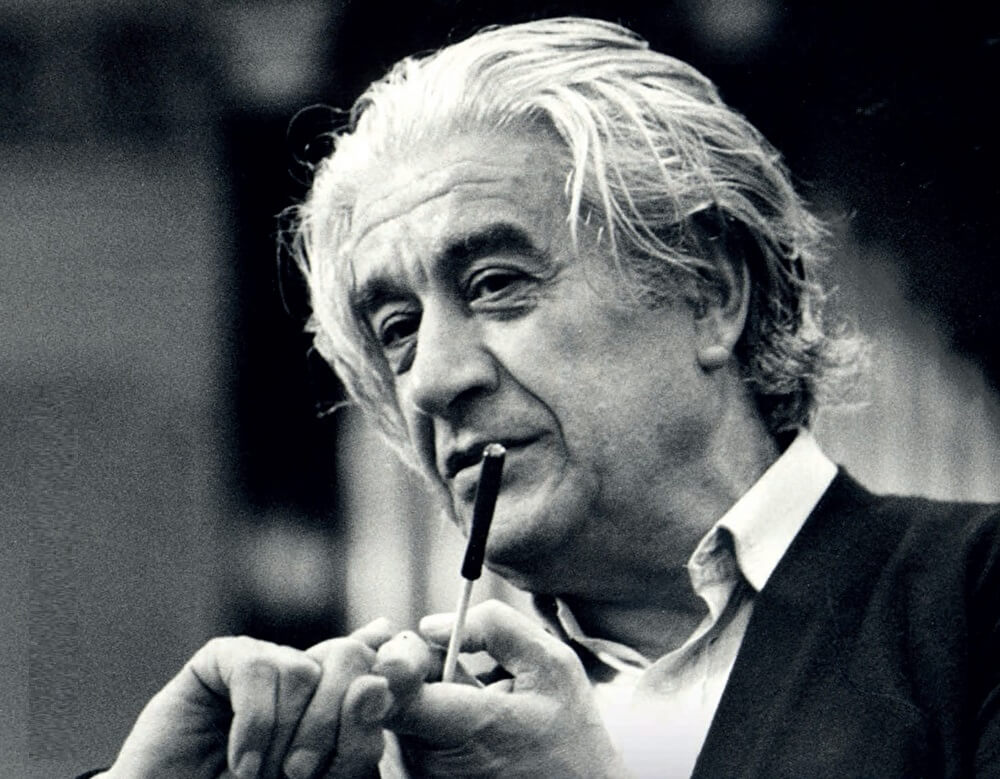
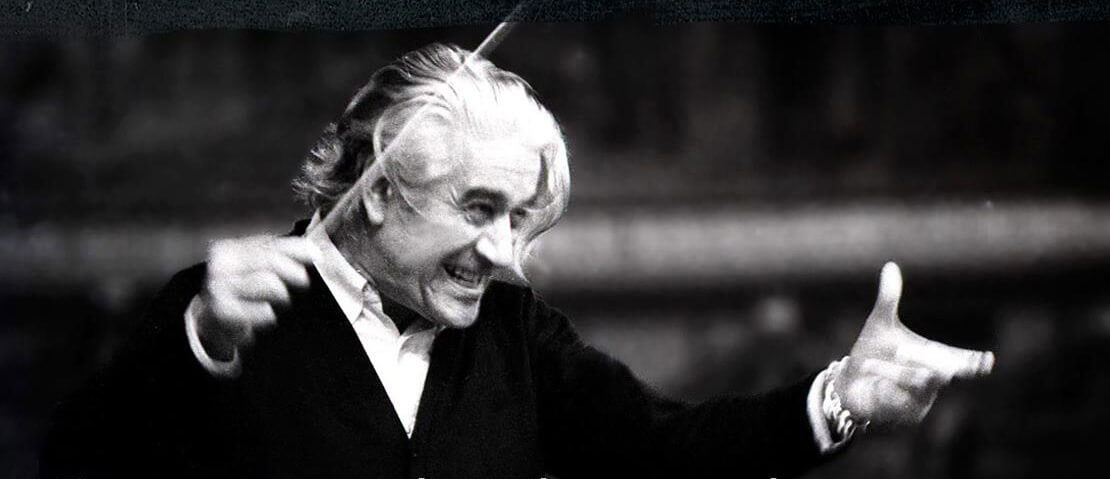
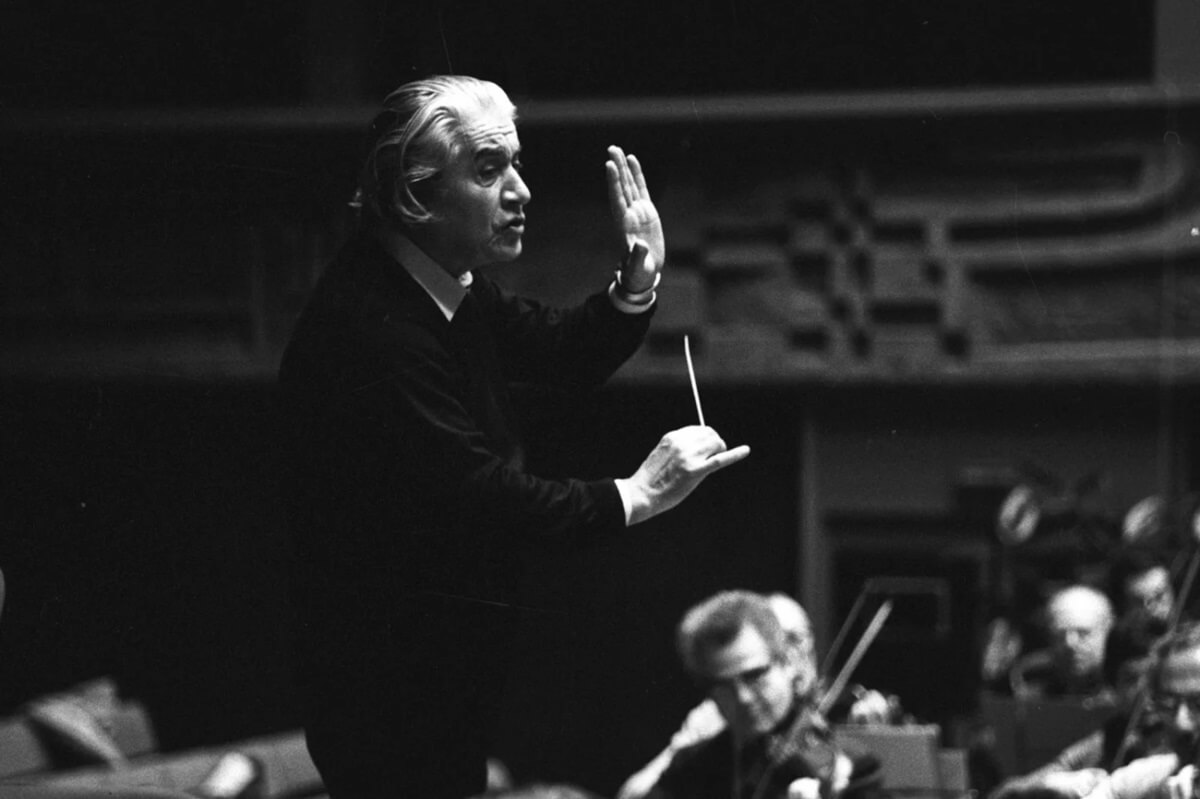
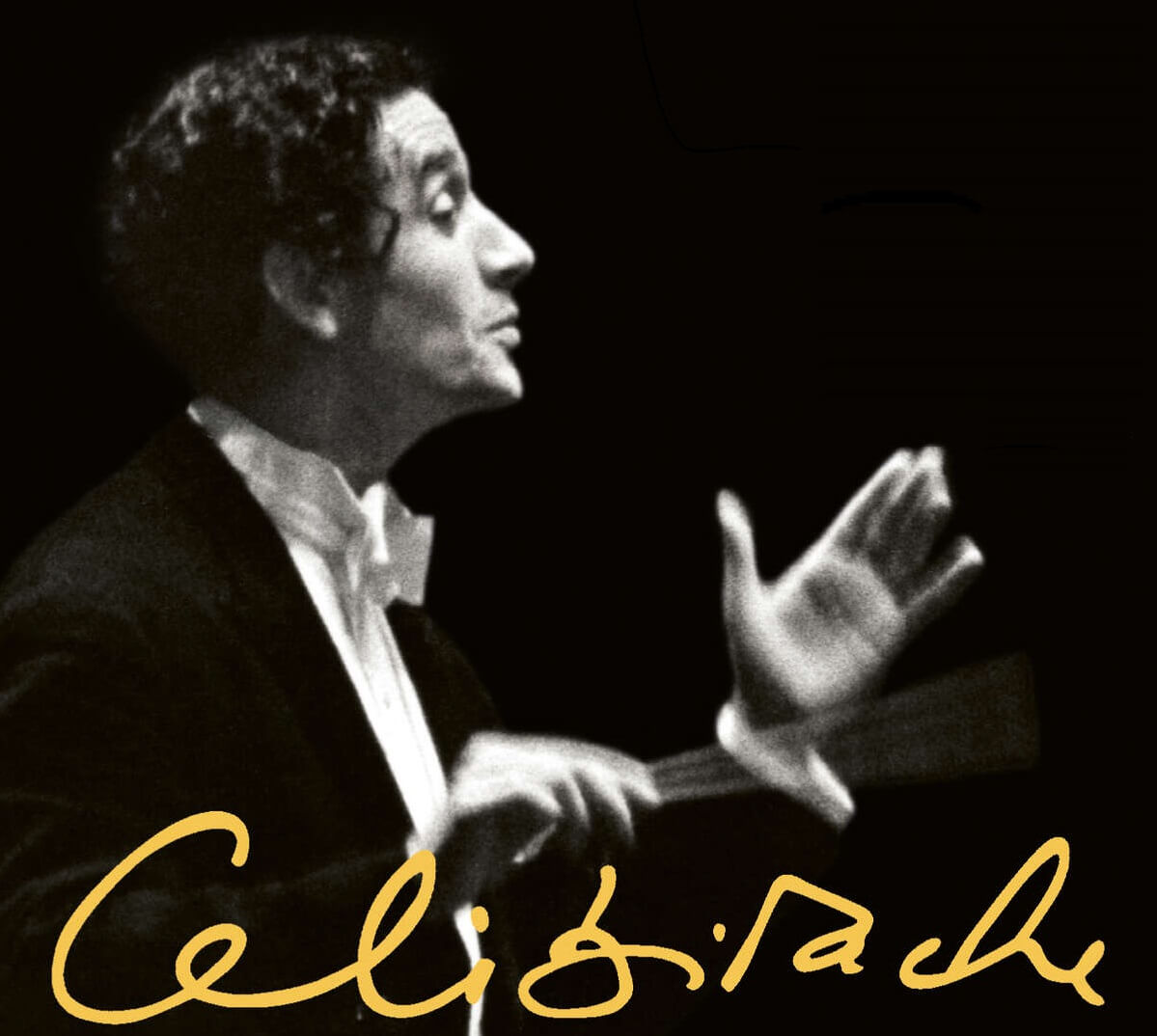
Renowned musicians and a large part of the general public consider Celibidache’s interpretation of Ravel’s Boléro unparalleled, and believe that the famous piece seems to have been composed specifically for him.